>

> Automobiles Hotchkiss was founded in the early years of the Twentieth Century in a plant of on the outskirts of Paris. The company was established as a subsidiary of the Hotchkiss et Cie armaments company.
Qui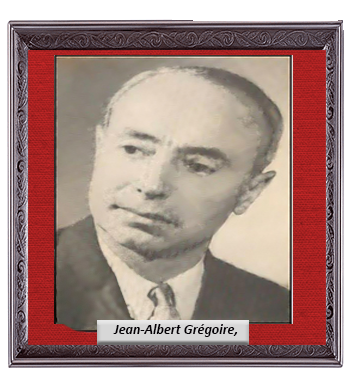 ckly earning themselves a reputation for reliability and craftsmanship in the automotive sector, by the Twenties, Hotchkiss cars were seen as refined yet sturdy vehicles, appealing to a wealthier clientele who preferred reliability over flamboyance.
Spurred on by their success, during the Thirties, Hotchkiss expanded their vistas and began, producing larger, more luxurious six-cylinder saloons and limousines alongside their more affordable models.
In addition to producing private cars, the company remained heavily involved in military production, manufacturing trucks, staff cars, and armaments with the Second World War looming from the East.
Whe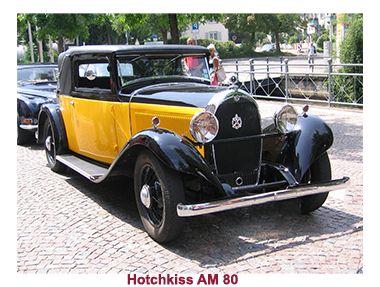 n war broke out in 1939, production shifted largely to military vehicles and equipment, temporarily halting its progress in the domestic market.
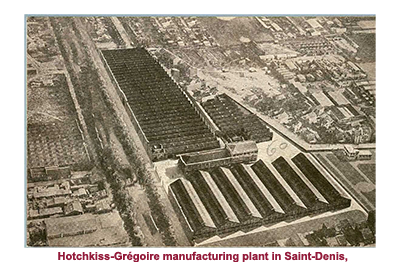
In the period of austerity that came after the end of the Second World War, established and highly conservative French car manufacturer Automobiles Hotchkiss decided to make a change in direction and turned a section of the their considerable manufacturing plant in Saint-Denis, just north of Paris, towards the development on a radical new model.
To 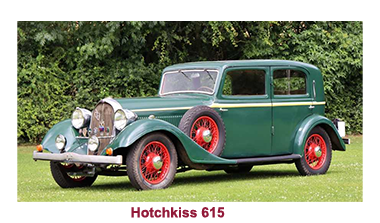 be known as the Hotchkiss-Grégoire., as it was conceived by engineer Jean-Albert Grégoire, known for his specialist skills in front-wheel drive and lightweight alloys since the Thirties. In1948. Hotchkiss acquired the rights to Grégoire’s advanced design in 1948 and prepared it for production, seeing in it a fast track to modernity.
It was decided that the new model, launched in 1950, would carry both names: Hotchkiss-Grégoire.
Design wise, among the most prominent of features were the Hotchkiss-Grégoire vestigial tailfins, par for the course during the early Fifties.
For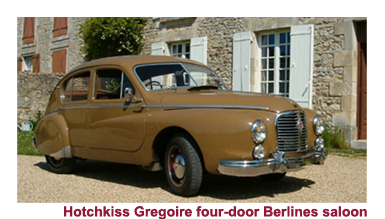 the first time for a French passenger, the brakes were discs on the front wheels. backed up by a Dewandre servo. A possible design flaw was the flat 4-cylinder engine of the saloon that did not have enough power for a vehicle of its size, that aspired to to compete with the likes of the Lancia Aurelia or Jaguar XK140 or the Lancia Aurelia.
Tec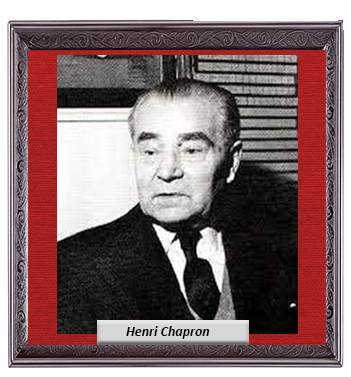 hnically, the car was years ahead of its time. Built around a light, largely aluminium structure and independent suspension, it placed a water-cooled, 2.2-litre flat-four well ahead of the cabin, driving the front wheels via a 4-speed gearbox (top with overdrive). The flat engine’s low height enabled a sleek bonnet line, and the front-drive layout promised impressive traction and packaging efficiency for a luxury saloon.
Contemporary figures quoted about 70–75 hp, enough for confident touring rather than outright speed, but the true headline was refinement and innovation: the Hotchkiss-Grégoire felt like the template for an enlightened post-war grand Routier ( touring car).
 Much as the Hotchkiss-Grégoire was well received mechanically and design-wise, it failed to achieve anything like commercial success. One of the reasons were the vehicle’s prohibitive development and tooling while production was painstakingly slow, meaning that if there had been demand for the vehicle, production figures remained stayed stubbornly low during its four-year production run.
To add to its lack of commercial success was the fact that the Hotchkiss-Grégoire was priced at a remarkably high premium, costing more than twice than Citroën’s six-cylinder Traction 15CV.
France’s horsepower-based taxation of the post-war years was designed to quell the demand for larger and consequently more luxurious cars. Hotchkiss’s existing clientele, who had gotten used to more conservative models hesitated at this dramatic break with tradition.
All of these negative factors culminated in the inescapable fact that between 1950 and 1953, the Hotchkiss-Grégoire sold around 247 units before the painful decision was taken to wind down production.
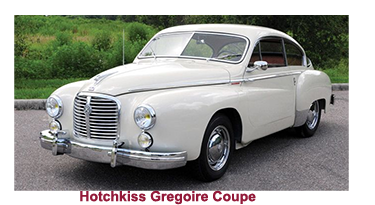 Most of the models produced were four-door Berlines saloons, while a limited run of special-bodied coupés and cabriolets completed the range, some of them designed and produced by the famed coachbuilder Henri Chapron.
And yet the car’s influence outlasted its sales sheet. As a synthesis of front-wheel drive, aluminium-intensive construction, and elegant road manners, the Hotchkiss-Grégoire anticipated priorities that would later define European touring cars: stability, packaging efficiency, and an engineer’s obsession with weight.
 The French market for luxury tourers could not be abated, meaning that #it only took a couple of years before spiritual successors began to appear, most notably the low-volume Grégoire-Sport of 1955,
For Hotchkiss the episode marked both audacity and the beginning of the end for passenger cars. The company’s attempt to leapfrog rivals via radical innovation came just as the market punished complexity and taxed according to the number of cylinders.
Citroën’s more affordable front-drive machines and the ascendant mass-producers had the momentum. Hotchkiss would retreat from the luxury-saloon arena not long afterward. In retrospect, the Hotchkiss-Grégoire reads like a brilliant but commercially unlucky skunkworks: a car that was right about the future but wrong about timing, scale, and price.
Survivors are few and far between with estimates of between thirty to forty Hotchkiss-Grégoire still around in running order. These include a tiny handful of Chapron-bodied specials and even rarer coupés. For avid classic car collectors, the appeal of owning a Hotchkiss-Grégoire is obvious: a jewel of French post-war engineering, a conversation-starter at any concours, and a rolling testament to Jean-Albert Grégoire’s uncompromising vision.