
Established in 1850 as a carriage manufacturer in Kopřivnice, Moravia (then a part of the Austrian Empire), Tatra developed into a pioneer in the production of heavy-duty trucks and passenger cars. The company's legacy extends well beyond its Central European origins and is renowned for its audacious engineering, unique designs, and spirit of innovation.
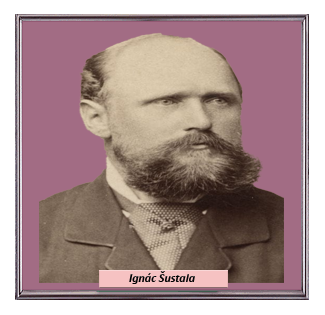 In 1850, a local character by the name of Ignác Šustala decided that the time was right to open a workshop that would specialise in the production of horse-drawn carriages, which were increasingly in demand... is where Tatra's story started.
The company, then known as Nesseldorf Wagen Bau-Fabrik, made the switch to the production of motorised vehicles in the late 1890s with the launch of the Präsident, considered to be the first automobile manufactured in Central Europe. Tatra's transition into an automobile manufacturer was marked by this historic event, and it soon gained a reputation for mechanical innovation.
Tatra produced both passenger cars and commercial vehicles in the early years of the Twentieth century, with their designs demonstrating the company's dedication to long-lasting products and cutting-edge engineering. Inspired by the untamed Tatra Mountains, which stand for tenacity and strength, the company formally adopted the name Tatra in 1919.
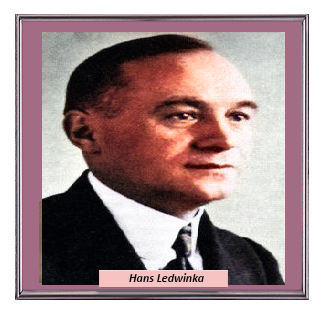
Another major milestone in the history of Tatra was the arrival of Hans Ledwinka, a talented Austrian engineer who joined the company in the early nineteen twenties, remaining till the outbreak of World War Two. Ledwinka's designs transformed the company’s fortunes, and possibly the entire European automotive industry by introducing design and production concepts bearing such impact that they are still felt more than a century later.
 The first and best known was the backbone tube chassis, a central structural tube that houses the driveshaft and has swing axles at the back, was one of his major contributions. This design became a defining characteristic of Tatra vehicles, as it was not only easier to manufacture but lighter, and stronger than conventional ladder frames.
Additionally, Ledwinka was recognized as behind the development of the air-cooled engine, which increased dependability and simplified operations. These, and other, developments gave Tatra automobiles remarkable durability in the challenging environments, of Eastern Europe a quality that still defines the brand's standing today.
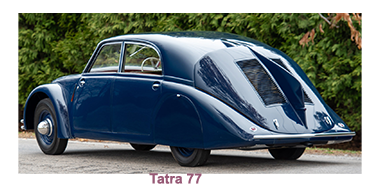
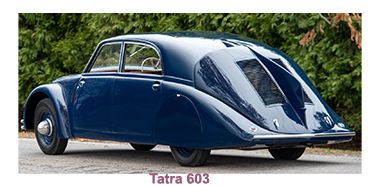
Thanks to Hans Ledwinka’s vision Tatra rose to prominence in the design of aerodynamic automobiles in the Thirties. In 1934, the company introduced the Tatra 77, regarded as being the first aerodynamically designed car to be produced in commercial quantities.
The T77 was generally regarded as being decades ahead of its time with its streamlined body, rear-mounted air-cooled V8 engine, and teardrop shape.
 Soon Tatra's sleek automobiles began to have an impact that went well beyond the borders of Czechoslovakia. It was reputed that Ferdinand Porsche when creating the Volkswagen Beetle, took too much inspiration from Ledwinka's designs. Eventually the resemblance resulted in legal disputes between Tatra and Volkswagen, which were only resolved a few decades later.
The outbreak of World War Two saw an end to the glorious era for Tatra. After the Nazis invaded Czechoslovakia in 1938, Tatra’s factories were commandeered by the Nazis, who used them to construct military vehicles.
Following the war, Tatra was nationalised after the Soviet bloc took control of Czechoslovakia.
 In the immediate post war years, Tatra’s production was concentrated principally on trucks, which were proven to be invaluable in harsh environments because of their air-cooled engines and sturdy backbone chassis.
Although under considerable pressure from the Soviet bloc to focus only on truck production, Tatra design’s team were determined to produce a private car and continued their development work in secret.
 As fate would have it, in the early Fifties, frustrated with delays in delivery of Soviet cars as well as with their poor quality when they eventually did arrive, the local government sanctioned Tatra with the development of a new luxury limousine, giving legitimacy to the design team's clandestine activities.
Their only stipulation was that the new car was to have a 3.5-litre air-cooled eight-cylinder engine, and it was to be ready for production by the end of 1954.
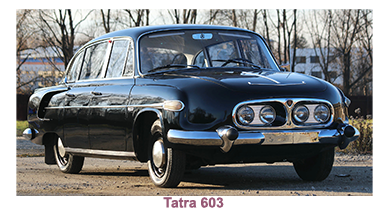
The first drivable T603 was completed in 1955, with three versions of the model remaining in production between 1956 and 1975, designated as the T603, T 2-603 and T 3-603. Between the three versions, just over twenty thousand were produced.
Because Tatras were manufactured in small quantities, the public rarely had access to them, which raised the curiosity of the car industry in the West.
 While Tatra vehicles barely made an impression on the development of the car industry in the UK and Western Europe during the Fifties and Sixties, it is an acknowledged fact that Hans Ledwinka’s vision, creativity and tenacity, sewed some very major seeds through developing the first backbone chassis and aerodynamics. Ledwinka’s perseverence and ability to adapt to changes in circumstances while maintaining Tatra's engineering identity in the face of political upheavals and economic hardships was worthy of recognition.