 Accurate assembly is fundamental to the structural integrity, safety, and authenticity of any classic car restoration. Whether refitting aluminium panels, reconstructing inner wings, assembling trim, or recreating factory-style joints, restorers rely on fastening and clamping tools that deliver consistency, control, and repeatability. Pneumatically powered riveting, clamping, and assembly tools have long been favoured in professional restoration workshops because they combine high force with precision while minimising operator fatigue and the risk of damage to aged materials.
The pneumatic rivet gun (blind rivets) is one of the most used fastening tools in restoration work. Blind rivets are frequently employed where access is limited to one side of a panel, such as inner wings, bulkheads, door frames, and underbody repairs.
Accurate assembly is fundamental to the structural integrity, safety, and authenticity of any classic car restoration. Whether refitting aluminium panels, reconstructing inner wings, assembling trim, or recreating factory-style joints, restorers rely on fastening and clamping tools that deliver consistency, control, and repeatability. Pneumatically powered riveting, clamping, and assembly tools have long been favoured in professional restoration workshops because they combine high force with precision while minimising operator fatigue and the risk of damage to aged materials.
The pneumatic rivet gun (blind rivets) is one of the most used fastening tools in restoration work. Blind rivets are frequently employed where access is limited to one side of a panel, such as inner wings, bulkheads, door frames, and underbody repairs.
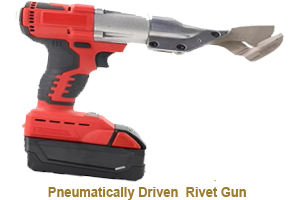 The advantage of pneumatic rivet guns is that they consistently apply pulling force, that ensures that each rivet is set evenly and fully, bringing a uniformity that is particularly important when working on thin or brittle original panels. Over-pulling can distort metal and under-pulling can compromise joint strength. Compared with manual riveters, pneumatic versions significantly reduce hand strain and allow hundreds of rivets to be installed accurately in a single session—an important advantage during large-scale panel replacement or structural repairs.
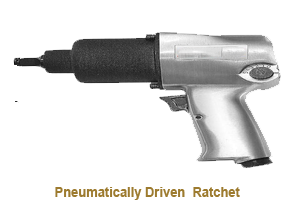 For more challenging restorations and maintenance projects that require requiring a more traditional or refined fastening method an air rivet squeezer should be called in. Often used with solid rivets, tubular rivets, or specialised fasteners found on older vehicles, the air rivet squeezer provides exceptional control and finish quality. especially those with aluminium bodywork or aircraft-inspired construction techniques, through their ability to pneumatic rivet squeezers apply steady, controlled pressure rather than impact, resulting in clean, factory-style rivet heads with minimal surface marking. These factors combine to make the air rivet squeezer an idea tool for repairs to bonnet frames, door edges and interior structures where appearance is critical.
 When accurate panel alignment is equally important in the assembly process this is where the air panel clamp tool comes into its own. In the course of bodywork repairs and panel fabrication, the ability to apply a temporary clamp is essential to ensure correct gaps, alignment, and fit before permanent fastening or welding.
Pneumatically powered panel clamp tools provide rapid, hands-free clamping with consistent pressure, allowing restorers and maintenance workers to pin-point position panels without the risk of distortion, particularly beneficial when working with large, flexible panels or when aligning complex multi-panel assemblies common on classic monocoque shells.
One of the key advantages of pneumatic assembly tools is their excellent power-to-weight ratio. Air tools are typically lighter than their electric counterparts, reducing operator fatigue during repetitive tasks such as riveting long seams or clamping multiple panels. This improved ergonomics enhances accuracy, as the operator can maintain steady positioning and pressure over extended periods—an important factor when working on high-value, irreplaceable components.
When accurate panel alignment is equally important in the assembly process this is where the air panel clamp tool comes into its own. In the course of bodywork repairs and panel fabrication, the ability to apply a temporary clamp is essential to ensure correct gaps, alignment, and fit before permanent fastening or welding.
Pneumatically powered panel clamp tools provide rapid, hands-free clamping with consistent pressure, allowing restorers and maintenance workers to pin-point position panels without the risk of distortion, particularly beneficial when working with large, flexible panels or when aligning complex multi-panel assemblies common on classic monocoque shells.
One of the key advantages of pneumatic assembly tools is their excellent power-to-weight ratio. Air tools are typically lighter than their electric counterparts, reducing operator fatigue during repetitive tasks such as riveting long seams or clamping multiple panels. This improved ergonomics enhances accuracy, as the operator can maintain steady positioning and pressure over extended periods—an important factor when working on high-value, irreplaceable components.
 Safety is another significant benefit of working with pneumatic tools, as they generate minimal heat and generate no electrical sparks, reducing fire risk in a classic car restoration and maintenance workshop. Their controlled, predictable operation also reduces the likelihood of sudden tool reactions that could damage delicate panels or injure the operator.
From a workflow perspective, pneumatically powered riveting and clamping tools integrate seamlessly into a professional workshop, working around a central compressed air system capable of supplying multiple assembly stations, allowing clamping, drilling , riveting and surface preparation to occur simultaneously and at levels of efficiency which are particularly valuable during full body restorations, where coordinated assembly work is essential to maintaining progress and quality.
Pneumatically powered assembly, clamping riveting, clamping, and assembly tools provide the precision, consistency, and efficiency required for high-quality classic car restoration. From the dependable setting force of a pneumatic rivet gun to the refined control of an air rivet squeezer and the accuracy of an air panel clamp tool, these tools help ensure that restored vehicles are assembled to a standard that can match their original factory construction.
Safety is another significant benefit of working with pneumatic tools, as they generate minimal heat and generate no electrical sparks, reducing fire risk in a classic car restoration and maintenance workshop. Their controlled, predictable operation also reduces the likelihood of sudden tool reactions that could damage delicate panels or injure the operator.
From a workflow perspective, pneumatically powered riveting and clamping tools integrate seamlessly into a professional workshop, working around a central compressed air system capable of supplying multiple assembly stations, allowing clamping, drilling , riveting and surface preparation to occur simultaneously and at levels of efficiency which are particularly valuable during full body restorations, where coordinated assembly work is essential to maintaining progress and quality.
Pneumatically powered assembly, clamping riveting, clamping, and assembly tools provide the precision, consistency, and efficiency required for high-quality classic car restoration. From the dependable setting force of a pneumatic rivet gun to the refined control of an air rivet squeezer and the accuracy of an air panel clamp tool, these tools help ensure that restored vehicles are assembled to a standard that can match their original factory construction.

- Pneumatically Powered Bodywork,Panel and Dent Repair Tools
- Pneumatically Powered Cleaning,Blowing and Degreasing Tools
- Pneumatically Powered Cutting,Grinding and Metal Removal Tools
- Pneumatically Powered Drilling, Fastening and Thread Work Tools
- Pneumatically Powered Mechanical and Service Tools
- Pneumatically Powered Paint, Coating and Finishing (Handheld) Tools
- Pneumatically Powered Riveting, Clamping and Assembly Tools
- Pneumatically Powered Sanding, Surface Preparation and Rust Removal Tools
- Pneumatically Powered Vibration, Impact and Specialty Tools
to4