 Maintaining the interior of a UK or European classic car from the Fifties or Sixties is as much an essential part of its restoration and maintenance preservation and restoration as its bodywork, underbody chrome, and engine components.
In many cases the vehicle’s upholstery, carpets, trim panels, and headlining materials are frequently original and are usually difficult or expensive to replace. Regular and thorough cleaning not only improves appearance but also protects delicate materials and helps retain the vehicle’s originality and value.
Classic cars, if driven even minimally naturally accumulate dirt, dust, moisture, and debris over time. Even vehicles that are driven infrequently or are even parked in the open air will suffer from gradual contamination caused by air-borne dust, clothing fibres, and moisture carried into the cabin.
Carpets and floor mats are particularly vulnerable because they trap grit and sand brought in on shoes. Over time this abrasive material can wear through the fibres of original carpeting. Dirt also tends to accumulate in hidden areas such as beneath seats and under removable mats, where it may remain unnoticed for years.
Another serious concern for a classic car owner is moisture build-up. Damp carpets and insulation can encourage corrosion in the vehicle’s floor pan, especially in cars fitted with steel monocoque bodies, typical of many British and European vehicles produced during the Fifties. Early detection of dampness or rust during cleaning can prevent costly structural repairs later.
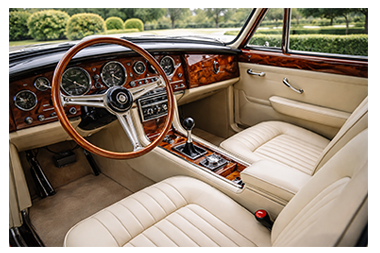 Upholstery also benefits from regular care. Dust and grime can gradually become embedded in fabric, vinyl, or leather seats. If neglected, this contamination hardens the material and accelerates wear. Leather, in particular, requires careful cleaning and conditioning to prevent cracking.
It a source of pride to own a restored and maintained classic car, with a well-maintained interior doubly enhances the driving experience. Clean seats, clear windows, and fresh trim create a pleasant environment that reflects the pride of ownership associated with classic motoring.
The good news is that cleaning a classic car’s interior does not require specialised machinery, although the correct tools will make the task easier and safer.
Typical equipment includes:
- A vacuum cleaner with a narrow nozzle attachment
- Soft brushes and upholstery brushes
- Microfibre cloths or lint-free cleaning cloths
- A mild upholstery cleaner suitable for fabric or vinyl
- Leather cleaner and conditioner (if leather seats are fitted)
- Interior trim cleaner
- A small bucket of warm water
- Soft sponges
- Plastic trim or dashboard polish
- Glass cleaner
As a classic car is a thing of delicate beauty, using harsh chemical cleaners must be avoided, as they can damage delicate fabrics, fade colours, or dry out older materials.
The first step in any deep thorough interior cleaning process has to be removing loose dirt. Begin by taking out any removable floor mats and shaking them outside the vehicle. If the car has loose carpets, these should also be removed and beaten gently to release trapped dust.
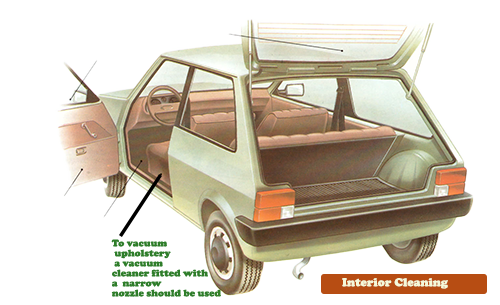
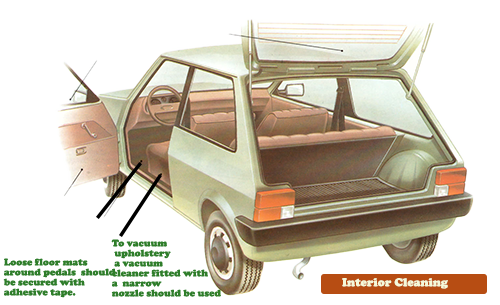
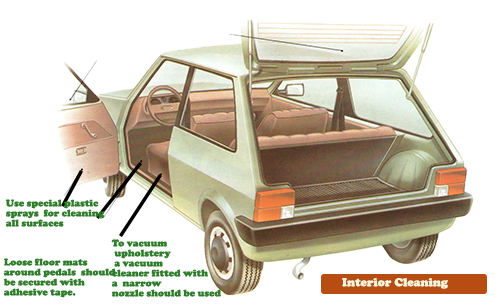
Next, vacuum the entire interior. Use a narrow nozzle to reach tight areas such as between seat cushions, under the dashboard, and along door sills. Pay particular attention to the areas beneath the front seats, where debris often accumulates unnoticed.
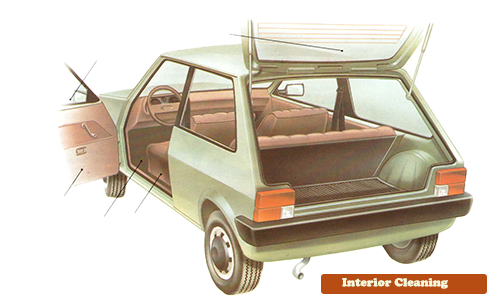
If the seats can be adjusted forward or backward, move them to expose hidden areas of carpet. In some cases—particularly during restoration work—it may be worthwhile to remove the seats entirely to allow proper cleaning and inspection.
Once loose dirt has been removed, the carpets can be cleaned more thoroughly. For lightly soiled carpets, brushing them with a soft upholstery brush after vacuuming may be sufficient.
For heavier contamination, a mild carpet cleaner mixed with warm water can be applied using a sponge or brush. Work the cleaner gently into the fibres and avoid soaking the material, as excessive moisture can penetrate to the floor pan beneath.
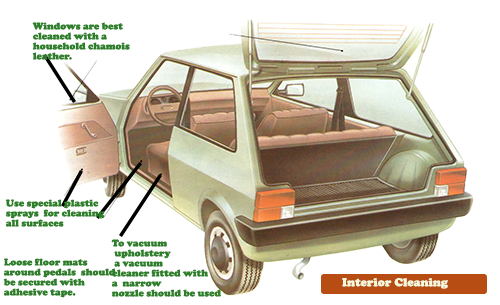
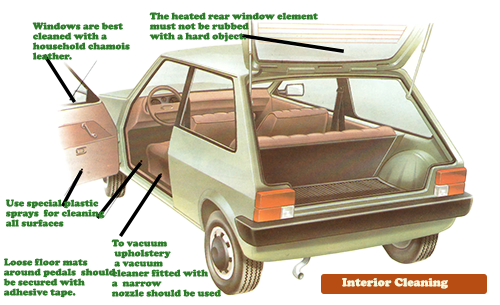
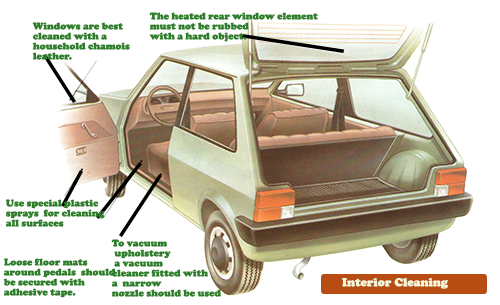
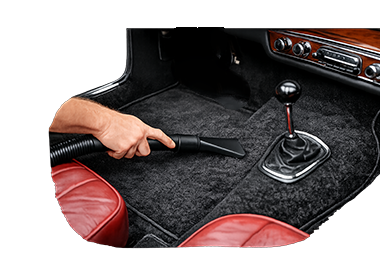 Loose floor carpets should be removed when working around the pedals and carefully beaten to remove dust and dirt. If they are screwed in place, a vacuum cleaner should be used instead. Move the front seats forward to reach the space underneath them.
Another option is to remove the trim strips. After removing the carpets, the condition of the floor panels should also be checked.
When refitting the carpets, care must be taken, as loose carpets can interfere with the operation of the pedals.
After cleaning, blot the carpet with a dry cloth to remove excess moisture and allow the interior to dry thoroughly with the doors open.
While the carpets are lifted or moved aside, it is advisable to inspect the floor panels for signs of corrosion. Early rust can often be treated before it becomes a serious structural issue.
The correct method for cleaning seats depends on the material used.
For the seat upholstery, a vacuum cleaner fitted with a narrow nozzle is particularly suitable. Heavily soiled upholstery should be cleaned after vacuuming with carpet shampoo, which is worked in with a sponge. The cleaning effect of the dried foam is what removes the dirt.
Especially stubborn dirt can be treated with concentrated shampoo. Special upholstery cleaners are also available.
Artificial leather upholstery can be wiped with a damp cloth. A small amount of plastic cleaner, preferably a vinyl cleaner, can be added to the cleaning water.
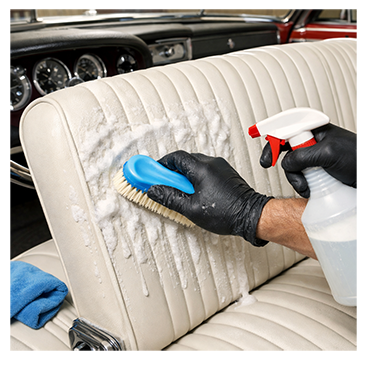 Vinyl seats are generally easier to maintain. A cloth dampened with warm water and mild cleaner will remove most dirt. Stubborn marks can often be removed with a specialised vinyl cleaner.
Leather seats require particular care. Use a dedicated leather cleaner to remove grime, followed by a leather conditioner to restore natural oils. This prevents the leather from drying and cracking, which is a common problem in older vehicles.
Door panels and dashboards in classic cars were often made from painted metal, vinyl-covered panels, or moulded plastic. These surfaces should be wiped with a soft cloth and a gentle interior cleaner.
Take care when cleaning around switches, gauges, and radio controls to avoid introducing moisture into electrical components.
After cleaning, a light application of interior trim polish can restore the original sheen of vinyl or plastic surfaces.
The headlining is often one of the most delicate parts of a classic car interior. Many vehicles from the Fifties and Sixties had headlining made from cloth or perforated vinyl. Both of which can easily be damaged.
Dust can usually be removed using a soft brush or the vacuum cleaner with a very gentle suction setting. If stains are present, they should be cleaned carefully using a barely damp cloth.
Avoid rubbing too vigorously, as this may loosen the adhesive or damage the lining.
Once all surfaces have been cleaned, the interior glass should be wiped clean using a suitable glass cleaner to remove fingerprints and haze. Clean windows significantly improve visibility and overall presentation.
If adhesive residues from stickers cannot easily be removed, a small amount of paint thinner may be carefully applied with a cloth. Care must be taken to prevent the thinner from coming into contact with paintwork or artificial leather.
 Special care must be taken with heated rear windows. If one of the heating elements is damaged, the entire rear window heating system may cease to function.
 Dirty seat belts can be cleaned with a foam cleaner. At the same time, the condition of the belt webbing should be checked, as safety belts do not last indefinitely with daily use.
Critical areas are the points where the belt passes through the mounting fittings. If frayed areas appear, particularly along the edges of the belt, the belt should be replaced as soon as possible.
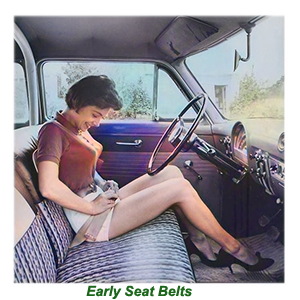 An undamaged seat belt always lies flat and smooth, never wavy. Wavy belts often occur after an accident. In such a case the belt has already performed its protective function and must be replaced.
The upper anchorage point should always be able to rotate freely.
Once the cleaning cycle has been completed, the car should be left to ventilate for several hours so that any remaining moisture can evaporate, preventing the build-up of mildew and keeps the interior fresh.
For owners and restorers of classic British and European vehicles, interior care should form part of a regular maintenance routine. By taking the time to clean carpets, upholstery, trim, and hidden areas, one can ensure that the interior remains comfortable, attractive, and authentic for many years to come.

ae4