
Metalwork lies at the heart of classic car restoration. From cutting out rusted panels and fabricating repair sections to cleaning welds and shaping brackets, the quality of the finished vehicle depends heavily on the tools used to cut, grind, and shape metal accurately.
In recent years, cordless cutting, grinding, and metal shaping tools have become a mainstay of the modern restoration workshop.Without the need to be attached to hoses and power leads, cordless cutting tools provider exceptional access, control, and flexibility, making for qualities that are invaluable when working on ageing bodyshells, tight engine bays and vehicles mounted on rotisseries or axle stands before painting.
The cordless angle grinder is one of the most heavily used tools in any restoration shop. It accepts cutting discs, flap discs, grinding wheels and wire brushes, allowing for tremendous versatility to perform multiple roles: among them cleaning rust, cutting out corroded panels, dressing welds, and preparing metal for welding or paint.
 Cordless versions of the angle frinder have found to be ideal because of their easy and instant portability, making them ideal for working under vehicles or around large bodyshells where cable management is awkward. Modern brushless motors provide ample power while electronic braking improves safety when working close to finished surfaces.
Excelling in precision grinding and metal finishing, straight cordless die grinders use small mounted stones, burrs or sanding drums, making them an ideal tool for cleaning weld toes, deburring drilled holes, shaping brackets, and refining tight internal corners. In classic cars, where access is often restricted by chassis rails or inner wings, the slim, pencil-like profile of a straight die grinder allows controlled material removal without damaging surrounding metal.
 Right-angle die grinders bring the same precision as straight models but with improved access to flat surfaces and awkward angles. Particularly useful for seam clean-up inside wheel arches, dressing plug welds on floor plans as well as smoothing repairs in confined areas, Right-angle die grinders cordless operation allows the tool to be rotated freely, improving both accuracy and ergonomics.
 Cordless cut-off tools are compact, high-speed cutters designed for thin discs. They are perfect for trimming sheet metal, cutting bolts, exhaust clamps, and small sections of bodywork with minimal disruption. Compared to a full-size angle grinder, they offer better control and visibility, making them suitable for delicate cutting tasks where preserving surrounding metal is essential—such as removing spot-welded panels or cutting out rust close to structural seams.
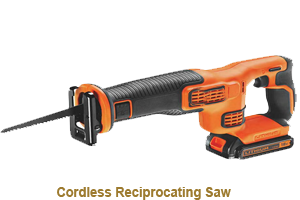
The cordless reciprocating saw is a powerful demolition and rough-cutting tool. Very useful in restoration work, the cordless reciprocating saw s commonly used for removing heavily rusted panels, cutting seized exhaust systems, dismantling scrap vehicles, or trimming chassis sections during major repairs. I The cordless reciprocating saw’s ability to cut steel, aluminium, and even wood with the correct blade makes it versatile, while cordless operation allows it to be used under vehicles or outdoors without restriction.
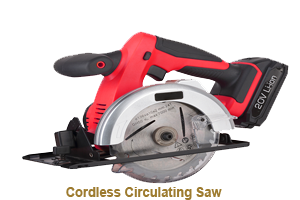 Cordless jigsaws offer controlled, curved cutting especially for thin metal sheets, aluminium panels, plywood, and plastics. When fabricating repair panels with complex shapes, cutting dashboard blanks, or trimming interior panels, handheld cordless jigsaws, thanks to their combination of variable speed and orbital action, easily provide cleaner, more accurate cuts than some of the heavier tools in the workshop, making it a favourite for precision bodywork fabrication.
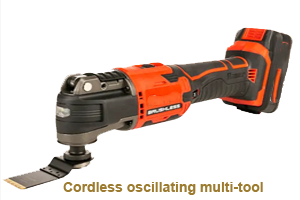 Among the most versatile tools in a restoration workshop, handheld cordless oscillating multi-tools thanks to their plunge-cut blades, scrapers, and sanding attachments, excel such arduous jobs as cutting small access slots, removing spot welds, trimming sealant, and removing old adhesives or under seal. The low vibration and precision combine to make the Cordless oscillating multi-tools a first choice for delicate operations where other cutting tools could possibly be regarded as being too aggressive.
Cordless rotary tools are an essential tool for projects where fine-detail work is required, such as cleaning threads, engraving alignment marks, polishing small components, performing delicate grinding tasks and trimming plastic parts. In the classic car restoration and maintenance workshop, cordless rotary tools have become e invaluable for instrument restoration, carburettor work, and small trim repairs where accuracy and control outweigh raw power.
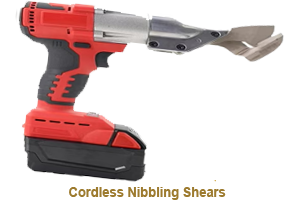 Designed specifically for cutting sheet metal cleanly and without distortion, cordless nibblers and shears are ideal for cutting floor sections, trimming repair panels and shaping aluminium or thin steel without generating excessive heat or sparks. The resulting clean edges reduce finishing time and improve the fit of fabricated panels.
Cordless power files, also known as belt files, come fitted with a narrow abrasive belt that finish, shape and smooth finish metal. especially when working in confined spaces. Particularly effective for dressing welds along seams, smoothing panel edges, and refining complex shapes where larger grinders cannot reach, the cordless power file’s controlled material removal action makes them a great tool to have around during final metal finishing stages.
Cordless cutting, grinding, and metal shaping tools have transformed the classic car restoration workshop, providing improved access, freedom of movement, and refined control, essential qualities when working on irreplaceable bodyshells and components. When combined with traditional hand tools and fixed workshop machinery, these cordless tools enable restorers to work more efficiently while maintaining the precision and care demanded by classic vehicles.

- Battery (cordless) powered Drilling, Driving, Fastening Tools
- Battery (cordless) powered Cutting, Grinding, Metal Shaping Tools
- Battery (cordless) powered Sanding, Surface Preparation, Rust Removal Tools
- Battery (cordless) powered Polishing, Detailing, Finishing Tools
- Battery (cordless) powered Bodywork Support Tools
- Battery (cordless) powered Electrical and Wiring Tools
to4