 The modern classic car restoration workshop increasingly relies on cordless drilling, driving, and fastening tools. While period-correct hand tools remain essential for authenticity and finesse, battery-powered equipment delivers speed, repeatability, and access advantages that are especially valuable when working on ageing vehicles with fragile fasteners, limited access, and mixed metric/imperial hardware.
In recent years, advances in brushless motors, lithium-ion battery technology and electronic torque control makes it a lot easier for allow cordless tools to perform tasks once reserved for pneumatic or mains-powered equipment. Without all the clutter and possible safety hazards of trailing hoses or cables that clutter the workshop or risk damaging paintwork.
The cordless drill/driver is the foundation of any restoration workshop. Combining variable-speed drilling with adjustable clutch settings, it allows precise control when drilling pilot holes, driving screws into timber dashboards, trim panels, or light brackets, and assembling jigs and fixtures. In classic cars—where wood, aluminium, Bakelite, and thin steel are common—the adjustable clutch prevents over-tightening and material damage. With modern brushless motors and compact batteries, these tools offer ample torque while remaining light enough for extended use during interior or body-off restoration work.
 A cordless hammer drill adds a percussive action to standard drilling, making it suitable for masonry and harder substrates. In a restoration context, its primary role is workshop-related rather than vehicle-related: fixing benches, lifts, shelving, or compressor brackets to concrete floors and walls. It is also useful for drilling through stubborn rusted steel sections, where the hammer action can help the bit bite without excessive pressure. Having this capability cordless avoids running long extension leads around vehicles on stands.
Thanks to its ability to deliver rotational force in rapid bursts, allowing stubborn screws and small bolts to be driven or removed with minimal cam-out, cordless impact drivers have become invaluable in the classic car restoration and maintenance workshop for removing old self-tappers, wood screws, and trim fasteners that would otherwise strip with a conventional drill.
Because impact drivers apply torque intermittently rather than continuously, they reduce wrist strain and lessen the risk of snapping fragile fasteners—particularly important on older vehicles with original hardware.
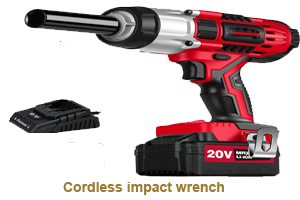 The cordless impact wrench has largely replaced pneumatic guns for wheel, suspension, and drivetrain work. Available in ¼", ⅜", and ½" drive formats, these tools can loosen rusted hub nuts, suspension bolts, and crankshaft pulleys with ease. In a classic car workshop, the key advantage is mobility: wheels can be removed with the car on stands anywhere in the workshop, and heavy fasteners can be cracked loose during field repairs or vehicle recovery without access to compressed air.
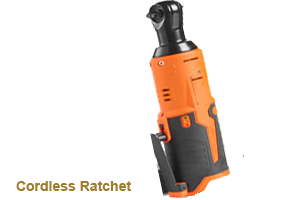 Cordless ratchets are particularly well suited to engine bays, under-dash areas, and chassis rails where space is restricted. They provide fast run-down and run-up of nuts and bolts once broken loose manually, significantly reducing fatigue during repetitive tasks such as manifold removal, gearbox installation, or suspension rebuilds. Because torque output is lower than an impact wrench, cordless ratchets are safer for use on small-diameter fasteners common on classic engines and carburettors.
Cordless screwdrivers are lighter and more delicate than drill/drivers, making them ideal for interior and trim work. Tasks such as instrument panel assembly, glovebox installation, switchgear fitting, and numberplate mounting benefit from their low torque and compact form. Many models include electronic torque limits and precision speed control, which is essential when working with brittle plastics, aged timber, or reproduction trim components.
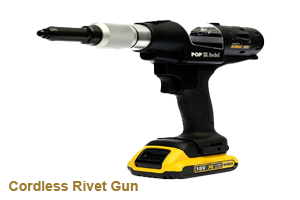 Riveting is widely used in classic car restoration for attaching aluminium panels, splash guards, heat shields, and trim brackets. A cordless rivet gun eliminates the hand fatigue associated with manual riveters, especially when installing dozens or hundreds of rivets during body or undertray work.
The cordless rivet gun generates consistent pull force that ensures uniform rivet setting, improving structural integrity and visual consistency.
 Rivnuts are best utilised when it comes to providing threaded fixing points in thin sheet metal where the traditional methods of tapping have proved to be impractical. Cordless rivnut tools allow fast, repeatable installation of threaded inserts in floor pans, bulkheads, and inner wings. In classic cars, Cordless rivnut tools they are particularly useful for removable panels, underbody protection as well as making discreet upgrades such as accessory brackets or seatbelt mounts, all while maintaining an aesthetically pleasing and rapidly, reversible installation.
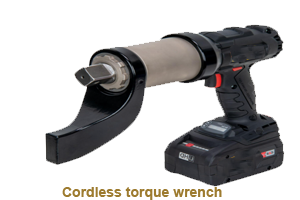 Establishing correct torque is a critical factor in classic car maintenance, where overtightening can distort castings or strip rare original threads. Cordless torque wrenches and digital torque adapters combine to provide precise electronic measurement with audible or visual alerts when the target torque is reached. They are especially valuable for bearing caps, cylinder heads, suspension components as well as wheel nuts, combining accuracy with the convenience of cordless operation when working around a vehicle on stands or a lift.
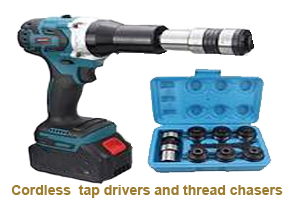 A constant problem in classic car restoration and maintenance workshops, is thread repair which can be caused by several factors, among them corrosion, paint buildup, and previous incorrect repairs. Cordless tap drivers and thread chasers offer slow, controlled rotation that reduces the risk of broken taps—an expensive and time-consuming problem in vintage castings. Used for cleaning existing threads rather than cutting new ones, Cordless tap drivers help preserve originality while ensuring accurate fastener engagement.
Cordless drilling, driving, and fastening tools have become indispensable in the classic car restoration and maintenance workshop, combining portability, control, and sufficient power to handle everything from delicate trim screws to seized suspension bolts.
When used alongside traditional hand tools and torque-controlled procedures, they enhance efficiency while respecting the fragility and historical value of classic vehicles. For restorers balancing authenticity with practicality, cordless technology represents one of the most beneficial modern upgrades to the workshop environment.

- Battery (cordless) powered Drilling, Driving, Fastening Tools
- Battery (cordless) powered Cutting, Grinding, Metal Shaping Tools
- Battery (cordless) powered Sanding, Surface Preparation, Rust Removal Tools
- Battery (cordless) powered Polishing, Detailing, Finishing Tools
- Battery (cordless) powered Bodywork Support Tools
- Battery (cordless) powered Electrical and Wiring Tools
to4