 Few stages of classic car restoration are as time-consuming—or as critical to the end result—as sanding, surface preparation and rust removal. Whether the job calls for preparing bare metal for welding, flattening primer before paint or removing decades of corrosion, the quality and effort put into surface preparation will have a very definite effect on the appearance, authenticity and authenticity of the paint job.
These are the reasons why cordless sanding and surface preparation tools have become increasingly popular in restoration workshops because they offer mobility, control, and reduced setup time while still delivering professional-grade results.
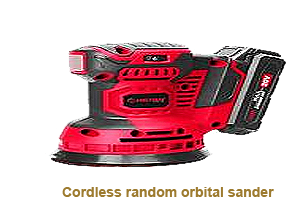 The cordless random orbital sander—often called a DA (dual action) or ROS—is the primary sanding tool for bodywork preparation. It combines orbital motion with rotation, producing a swirl-free finish that is ideal for flattening filler, smoothing primer, and keying paint surfaces. In classic car restoration, cordless random orbital sanders have become the first-choice option in bodyshops, widely used on bonnets, doors, panels wings, and, where maintaining flatness is an essential.
Cordless random orbital sanders allow unrestricted movement around large bodyshells, vehicles on rotisseries, or, because of their portability, cars that cannot be positioned in the workshop. As a result of the variable speed control and interchangeable backing pads, which has become standard on random orbital sanders, makes the tool adaptable for everything from aggressive stock removal to fine pre-paint sanding.
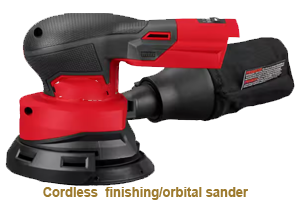 Using a more compact and consistent orbital motion than the DA sander, the Cordless finishing or orbital sander is more in demand when it comes to produce a finer surface finish. The cordless finishing or orbital sander are typically used during the latter stages of preparation, such as flattening clear coats, sanding high-build primer, preparing surfaces for polishing. In a classic car restoration or maintenance workshop, handheld cordless finishing sanders are especially useful on delicate areas and flatter panels where overly aggressive sanding could be liable to distort thin, original metal.
 Thanks to light weight, cordless finishing sanders are known to reduces operator fatigue during extended use, particularly important when seeking to achieve uniform results across large exterior panels.
Detail or “mouse” sanders are designed for precision work in tight or awkward spaces. Their pointed sanding pads allow access to corners, swage lines, window apertures, door shuts, and complex interior pressings. In classic vehicles—where body shapes are often more intricate than modern cars—this level of access is invaluable.
Cordless operation allows the restorer to move easily between different areas of the vehicle without trailing cables catching on trim or fresh paint, causing sanders to be called upon for rust preparation in seams and flanges where corrosion often begins.
 Used primarily for heavier preparation tasks cordless belt sanders are known for their ability to provide rapid material removal meaning that in restoration work, they are commonly employed for flattening welded seams, shaping body filler or removing thick layers of paint or underseal from flat surfaces. Belt sanders can significantly reduce preparation time during major repairs, although they must be used with great care.
Their cordless format is particularly useful when working on chassis components, floorpans, or panels positioned away from mains power.
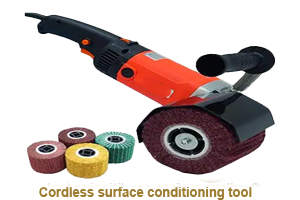
Cordless surface conditioning tools use non-woven abrasive wheels or drums rather than traditional sandpaper, doing a first-class job removing rust, paint, sealant, and oxidation without aggressively cutting into the base metal, making them an ideal tool for cleaning suspension components, inner wings, bulkheads, and engine bay panels where preserving metal thickness is essential.
Because surface conditioning tools generate less heat than grinding discs, they reduce the risk of panel warping and are well suited to thin, older steel.
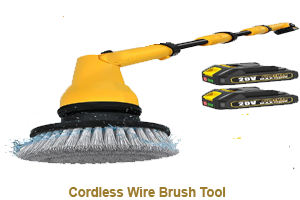 Cordless wire brush tools are designed for general rust removal and cleaning tasks. Fitted with cup or end brushes, they are used to strip rust from bolts, brackets, chassis rails, and suspension arms. Particularly useful during disassembly, cordless wire brush tools allowing components to be cleaned and assessed before repair or refinishing.
Operating in a similar manner to wire brushes but using larger, rotating wire wheels for faster coverage of larger areas, Wire wheel tools have consistently proven to be particularly effective for removing scale rust, old paint, and underseal from frames, subframes, and axle housings. In a restoration workshop, they are often used as a first-stage cleaning tool before finer surface conditioning or sanding.
Cordless wire wheel tools provide consistent speed and torque, enabling efficient cleaning without the abrupt surges sometimes associated with pneumatic tools.
Cordless sanding, surface preparation and rust removal tools play a very crucial role role in the modern classic car restoration and maintenance body shop. They offer the freedom to work anywhere around the vehicle, improved access to complex shapes, and refined control over material removal—essential when dealing with thin, ageing metals and irreplaceable original panels. When used thoughtfully alongside traditional hand tools and fixed machinery, cordless surface preparation equipment allows restorers to achieve high-quality, durable finishes while working efficiently and safely on classic vehicles.

- Battery (cordless) powered Drilling, Driving, Fastening Tools
- Battery (cordless) powered Cutting, Grinding, Metal Shaping Tools
- Battery (cordless) powered Sanding, Surface Preparation, Rust Removal Tools
- Battery (cordless) powered Polishing, Detailing, Finishing Tools
- Battery (cordless) powered Bodywork Support Tools
- Battery (cordless) powered Electrical and Wiring Tools
to4