
Restoring and maintaining electrical wiring systems are regarded as being among the most delicate and challenging. Coping with age-hardened insulation, corroded terminals, often botched up previous repairs and obsolete components are just a few of the challenges that will need to be faced.
To achieve the highest standards of safety and reliability while preserving originality to get a classic car’s wiring system back up to scratch will require a lot of care and precision backed up with the best of tools to do the job.
Since their advent in the early Seventies, cordless electrical and wiring tools have become an increasingly asset in classic car restoration and maintenance workshops, providing mobility, safety, and control when working inside confined cabins, engine bays, and under dashboards.A cordless soldering iron is possibly the most essential tool when it comes to attaching terminals, refurbishing switches and restoring instrument connections wiring joints. In the classic car world, soldered joints are often preferred over crimp-only repairs, particularly over long-term reliability where originality is important.
Cordless soldering irons provide a double advantage of supplying rapid heating while sustaining a steady temperature, all this without the hassle of trailing cables.
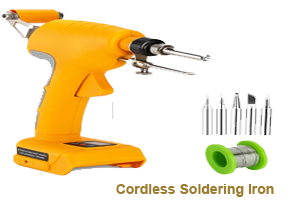 Enabling safe operation in confined areas like behind dashboards or within boot-mounted lighting assemblies, cordless soldering tools are particularly beneficial for repairing original looms, safeguarding the integrity of aged insulation. Cordless soldering irons usually come equipped with interchangeable tips, designed to deal with the finer aspects of auto electronics as well as heavier automotive wiring, rendering them versatile tools for any electrical restoration and ongoing maintenance project.
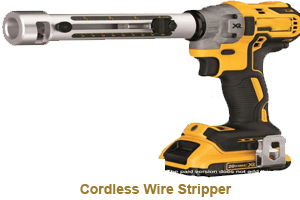 In vehicles produced pre-war and up to the late Fifties, wiring looms typically have brittle or cloth-covered insulation, which can be easily compromised by improper stripping methods. A cordless wire stripper enables precise insulation removal without damaging conductors, which is essential for preserving electrical integrity.
 In restoration workshops, cordless wire strippers find extensive application during loom repairs, rewiring projects and accessory installations. The adjustable stripping depths on these cordless wire strippers are designed to comply with a wide variety of wire gauges that were typically used in classic vehicles, ranging from the most delicate instrument wiring to more robust charging and lighting circuits.
Working with cordless wire strippers will effectively minimise hand fatigue, especially those that involve during repetitive tasks and facilitate easy access in confined areas.
Playing a vitally important role in auto electrical work, a cordless crimping tool guarantees consistent, repeatable crimps that align readily with contemporary reliability standards. In classic car restoration, cordless crimping tools are frequently utilised for replacing corroded connectors, fitting new terminals to refurbished looms or seamlessly integrating modern relays and fuse boxes.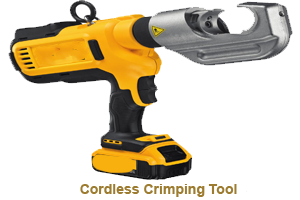 Battery-powered (cordless) crimpers minimise the chances of under- or over-crimping, frequent contributors to electrical failure.
Most cordless crimpers also accommodate interchangeable dies that allow for open-barrel, insulated, and non-insulated terminals, rendering them suitable for both period-correct connectors and contemporary enhancements.
In classic cars, electrical faults invariably arise in concealed or hard-to-reach locations,a cordless inspection camera, commonly referred to as a borescope, enables technicians to conduct visual inspections of wiring looms located behind dashboards, within sills, roof pillars, and engine bays, all without the need to disassemble significant portions of the vehicle.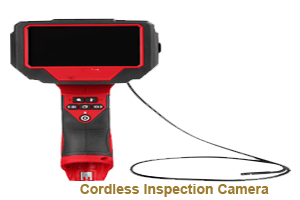 Essential for identifying chafed wires, inadequate routing, moisture ingress, or damage from prior repairs, cordless inspection cameras generally come equipped with LED illumination and flexible probes, allowing for clear visibility in dark cavities.
Cordless electrical and wiring tools have revolutionised the methods used by classic car restoration and maintenance workshops for handling the most difficult and delicate electrical tasks, enhancing the process of diagnosing faults, repairing looms, and installing components by integrating portability, precision, and safety, enabling restorers to work with increased confidence and efficiency.
Essential for identifying chafed wires, inadequate routing, moisture ingress, or damage from prior repairs, cordless inspection cameras generally come equipped with LED illumination and flexible probes, allowing for clear visibility in dark cavities.
Cordless electrical and wiring tools have revolutionised the methods used by classic car restoration and maintenance workshops for handling the most difficult and delicate electrical tasks, enhancing the process of diagnosing faults, repairing looms, and installing components by integrating portability, precision, and safety, enabling restorers to work with increased confidence and efficiency.

- Battery (cordless) powered Drilling, Driving, Fastening Tools
- Battery (cordless) powered Cutting, Grinding, Metal Shaping Tools
- Battery (cordless) powered Sanding, Surface Preparation, Rust Removal Tools
- Battery (cordless) powered Polishing, Detailing, Finishing Tools
- Battery (cordless) powered Bodywork Support Tools
- Battery (cordless) poweredElectrical and Wiring Tools
to4