 In a classic car restoration and maintenance workshop, cutting, grinding, and metal removal tasks are carried out daily—often on aged steel, aluminium panels, cast components, and fasteners that have endured decades of corrosion and fatigue.
 Pneumatically powered tools have long been favoured in professional restoration environments because they combine high power, durability, precision, and excellent ergonomics. When supported by a properly specified compressed air system, air tools deliver a set of advantages that are particularly well suited to classic vehicle work.
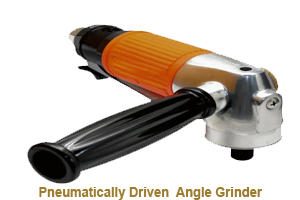
One of the most widely used tools in this category is the air angle grinder. Compared with electric grinders, pneumatic versions are typically lighter and slimmer, reducing operator fatigue during extended grinding, weld dressing, or rust removal.
Pneumatically powered tools have long been favoured in professional restoration environments because they combine high power, durability, precision, and excellent ergonomics. When supported by a properly specified compressed air system, air tools deliver a set of advantages that are particularly well suited to classic vehicle work.
One of the most widely used tools in this category is the air angle grinder. Compared with electric grinders, pneumatic versions are typically lighter and slimmer, reducing operator fatigue during extended grinding, weld dressing, or rust removal.
 The high power-to-weight ratio of the angle grinder makes for sustained operation without the risk of overheating, invaluable when cleaning chassis rails, suspension components, or weld seams. Additionally, pneumatically drive grinders are highly dust tolerant, stand up well to excess vibration, and intermittent stalling at a much higher level than electrically powered motors, important when working on uneven metal surfaces.
For more detailed work, the air die grinder (straight) and air die grinder (angle / 90°) provide exceptional control. These tools consistently provide excellent results when it comes to deburring, gasket removal, port matching, and refining complex shapes on castings or fabricated panels.
The high power-to-weight ratio of the angle grinder makes for sustained operation without the risk of overheating, invaluable when cleaning chassis rails, suspension components, or weld seams. Additionally, pneumatically drive grinders are highly dust tolerant, stand up well to excess vibration, and intermittent stalling at a much higher level than electrically powered motors, important when working on uneven metal surfaces.
For more detailed work, the air die grinder (straight) and air die grinder (angle / 90°) provide exceptional control. These tools consistently provide excellent results when it comes to deburring, gasket removal, port matching, and refining complex shapes on castings or fabricated panels.
 Pneumatic die grinders can maintain consistent torque at high speed, allowing smooth material removal without sudden surging that sometimes experienced with their electric equivalents. The availability of 90-degree heads makes them especially useful when accessing confined areas such as engine bays, footwells or inside boxed sections of classic monocoque shells.
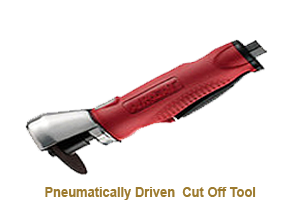
The air cut-off tool is another staple of the restoration workshop. Compact and fast spinning, it is ideal for trimming panels, cutting seized fasteners, removing exhaust sections, or separating spot-welded components.
Pneumatic die grinders can maintain consistent torque at high speed, allowing smooth material removal without sudden surging that sometimes experienced with their electric equivalents. The availability of 90-degree heads makes them especially useful when accessing confined areas such as engine bays, footwells or inside boxed sections of classic monocoque shells.
The air cut-off tool is another staple of the restoration workshop. Compact and fast spinning, it is ideal for trimming panels, cutting seized fasteners, removing exhaust sections, or separating spot-welded components.
 A notable advantage of pneumatic cut-off tools is that they generate minimal heat at the motor itself, meaning that they can be used continuously without thermal shutdown, critical during body shell disassembly, where dozens of precise cuts may be required.
The air reciprocating saw and air nibbler are particularly useful when controlled cutting in thin metal and complex shapes is required.
A notable advantage of pneumatic cut-off tools is that they generate minimal heat at the motor itself, meaning that they can be used continuously without thermal shutdown, critical during body shell disassembly, where dozens of precise cuts may be required.
The air reciprocating saw and air nibbler are particularly useful when controlled cutting in thin metal and complex shapes is required.
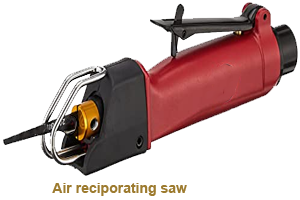 Pneumatic reciprocating and body saws provide excellent feedback and vibration control, allowing accurate cuts through floor pans, wings, and repair sections. Air nibblers, meanwhile, remove material without distortion or excessive heat input, preserving surrounding metal—a key concern when working with original, irreplaceable body panels.
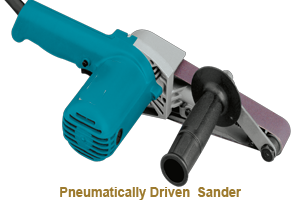
Surface finishing and refinement benefit greatly from the air belt sander / power file. This tool is particularly effective for shaping welds, smoothing panel edges, and dressing tight corners where conventional grinders cannot reach. Pneumatic belt sanders run smoothly at consistent speed, giving restorers fine control over material removal while reducing the risk of gouging or overheating thin steel and aluminium panels.
At the smallest scale, the air rotary tool (high-speed) provides precision unmatched by many electric alternatives, making them ideal for engraving, delicate grinding, polishing, and intricate metal removal tasks on trim, carburettor parts, brackets, and interior fittings.
Their compact size and lightweight construction make them the first choice for extended use without operator strain, while their resistance to overload makes them reliable for fine restoration work.
Pneumatic reciprocating and body saws provide excellent feedback and vibration control, allowing accurate cuts through floor pans, wings, and repair sections. Air nibblers, meanwhile, remove material without distortion or excessive heat input, preserving surrounding metal—a key concern when working with original, irreplaceable body panels.
Surface finishing and refinement benefit greatly from the air belt sander / power file. This tool is particularly effective for shaping welds, smoothing panel edges, and dressing tight corners where conventional grinders cannot reach. Pneumatic belt sanders run smoothly at consistent speed, giving restorers fine control over material removal while reducing the risk of gouging or overheating thin steel and aluminium panels.
At the smallest scale, the air rotary tool (high-speed) provides precision unmatched by many electric alternatives, making them ideal for engraving, delicate grinding, polishing, and intricate metal removal tasks on trim, carburettor parts, brackets, and interior fittings.
Their compact size and lightweight construction make them the first choice for extended use without operator strain, while their resistance to overload makes them reliable for fine restoration work.

- Pneumatically Powered Bodywork,Panel and Dent Repair Tools
- Pneumatically Powered Cleaning,Blowing and Degreasing Tools
- Pneumatically Powered Cutting,Grinding and Metal Removal Tools
- Pneumatically Powered Drilling, Fastening and Thread Work Tools
- Pneumatically Powered Mechanical and Service Tools
- Pneumatically Powered Paint, Coating and Finishing (Handheld) Tools
- Pneumatically Powered Riveting, Clamping and Assembly Tools
- Pneumatically Powered Sanding, Surface Preparation and Rust Removal Tools
- Pneumatically Powered Vibration, Impact and Specialty Tools
to4