
Electrically powered handheld cutting and metal removal tools are essential in classic car restoration and maintenance, where highly trained craftsmen are required to deal with decades of corrosion, previous repairs and fatigue-prone materials, before they can begin the repair stage.
While hand tools remain vital for fine work, electric cutting tools provide the speed, consistency, and control required for such tasks as body repairs, chassis fabrication, exhaust work, and component refurbishment.
When used thoughtfully and with car, electrically powered handheld cutting and metal removal tools will combine to allow restorers to remove damaged metal while preserving as much original material as possible.
The angle grinder is one of the most versatile tools in any classic car restoration and maintenance workshop’s artillery. The angle grinder is operated by an electric motor which drives a spindle at high speed, cutting discs, grinding wheels, flap discs, or wire brushes can be fitted onto the angle grinder according to the nature of the project.
 Angle grinders are indispensable when it comes to cutting rusted bolts, removing old welds, cleaning chassis rails, dressing welds or stripping paint or corrosion. The angle grinder’s adaptabilities make them ideal for both rough cutting and controlled material removal, particularly when working on structural steel.
 When working on heavy-duty projects, there is a large angle grinder available which
typically uses larger discs, delivering higher torque and cutting depth.
Large angle grinders are best suited for heavy chassis repairs, thick steel sections, and suspension mounts. In classic restorations involving ladder frames or commercial vehicles, large angle grinders hey provide the power needed for demanding metal removal tasks.
When it comes to precision metal removal. the straight die grinder is usually the tool of choice. The straight die grinder is powered by a compact electric motor that spins small rotary burrs, stones, or abrasive points at very high speeds.
The advantages of straight die grinders are that they excel at cleaning welds, shaping brackets, deburring drilled holes as well as refining castings. Straight die grinders are especially valuable when working on engine ports, gearbox casings, and intricate metal components where accuracy matters more than speed.
Another variation on the same theme is the angle die grinder which combines precision with improved access. The gearbox on the right-angle grinder redirects rotation, allowing controlled grinding in tight spaces.
The right-angle grinder is ideal for working in confined areas such as suspension turrets, inner wings, and chassis corners, allowing careful metal removal without dismantling surrounding components—crucial when preserving original structures.
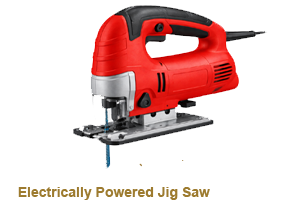 The electric jigsaw is a valuable tool in any classic car restoration and maintenance workshop offering controlled, low distortion cutting, through its reciprocating blade which moves vertically through the material, guided by a base plate.
Equipped with a variety of metal-cutting blades, handheld electrically powered jigsaws are ideal for cutting complex curves in body panels, floors, and bulkheads. Compared with grinders, they generate less heat and distortion—particularly important when working with thin classic-car steel.
Removing surplus metal by punching small sections, the electric nibbler, perfect for rust repair and panel replacement, as they cut without sparks or heat buildup. This attribute reduces the risk of warping thin sheet metal making the electric nibbler especially suitable for cutting around delicate edges and seams.
 The electric cut-off tool is specifically designed for making clean, straight cuts operated by a thin abrasive disc which rotates at high speed to slice through metal with minimal kerf.
Cut-off tools are excellent for trimming panels, cutting exhaust tubing, removing seized fasteners, and sectioning damaged metal. The Cut-off tools’ narrow cutting width helps preserve surrounding material, making them ideal for patch panel preparation.
Used for straight, repeatable cuts in stock material, the metal chop saw is invaluable for fabricating brackets, exhaust systems, roll bars, and chassis reinforcements. Their accuracy and repeatability improve consistency when producing multiple identical components.
The metal chop saw is operated through a high-speed abrasive disc is lowered through metal held securely in a vice.
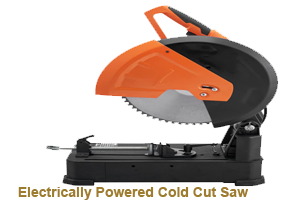 The role of the cold cut saw in a classic car restoration and maintenance workshop is to produce clean, burr-free cuts with minimal heat, preserving material properties and dimensional accuracy, making them ideal for precision fabrication work where fit and alignment are critical.
Using a toothed blade rather than an abrasive disc, the cold cut saw is powered by a slow-speed, high-torque motor that drives a hardened blade that shears metal rather than grinding it.
Designed for cutting sheet metal cleanly, electric shears are excellent for trimming panels, removing rusted sections, and cutting long straight lines in thin steel or aluminium. Electric shears produce minimal distortion, making them well suited to classic bodywork repair.
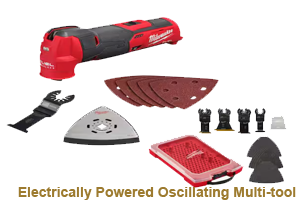 The oscillating multi-tool offers unmatched versatility when it comes to cutting spot welds, trimming panels in situ, removing sealant, and cutting in confined spaces. Their precision makes them invaluable for delicate restoration tasks where surrounding material must remain untouched. The blade oscillates through a small arc at high frequency, allowing plunge cuts and controlled trimming.
Operated by a high-speed motor spins miniature cutting discs, burrs, and polishing accessories the rotary tool is a precision finishing instrument
Rotary tools excel at detailed work such as cleaning threads, trimming small brackets, engraving markings, and refining delicate components. In classic car restoration, and maintenance projects, rotary tools are particularly useful for carburettors, electrical terminals, and trim work.
Electrically powered cutting and metal removal tools are central to effective classic car restoration and maintenance. From heavy structural cutting to delicate precision finishing, each tool serves a distinct purpose within the workshop. When chosen carefully and used with restraint, electrically powered cutting and metal removal tools these tools enable restorers to remove corrosion, fabricate accurate repairs, and preserve original material—balancing modern efficiency with traditional craftsmanship at the heart of classic vehicle restoration.

to4