 Accurate inspection, measurement, and mechanical setup are essential disciplines in classic car restoration and maintenance. Unlike modern vehicles, classic cars often lack electronic self-diagnostics, making physical inspection and precise manual measurement the primary means of assessing condition and performance.
Hand-held electrically powered inspection and measurement tools allow restorers to work with far greater confidence, accuracy, and repeatability—while minimising unnecessary dismantling and the risk of damaging scarce or original components.
 An electric digital calliper uses an electronic linear encoder to measure distance between jaws, displaying results instantly on a digital screen. Measurements can typically be switched between metric and imperial units at the touch of a button.
Digital callipers are fundamental tools in a classic car workshop, used for measuring shaft diameters, bearing journals, brake disc thickness, gasket materials, fasteners, and clearance dimensions. Compared with traditional vernier calipers, digital versions reduce reading errors and speed up workflow. This accuracy is especially important when working with worn components, where tolerances must be carefully assessed to determine whether parts can be reused, machined, or replaced.
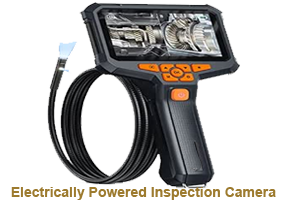
In classic car restoration, inspection cameras are invaluable for examining cylinder bores, valve seats, piston crowns, gearbox internals, chassis box sections, sills, and fuel tanks without disassembly. They help identify corrosion, scoring, carbon build-up, cracks, or previous repairs before committing to major work. This non-invasive approach saves time, preserves originality, and supports informed decision-making—particularly important when assessing historically significant or rare vehicles.
Often called a borescope or endoscope, an electric inspection camera uses a miniature digital camera mounted on a flexible or semi-rigid probe. Images and video are transmitted to a handheld screen, allowing real-time visual inspection of confined or inaccessible areas.
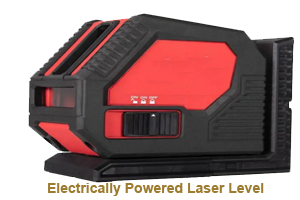 An electrically powered laser level projects one or more straight laser lines using a diode and optical lens system. Self-levelling models automatically compensate for minor surface irregularities, ensuring accurate alignment.
In classic car restoration, laser levels are extremely useful for chassis setup, suspension geometry checks, panel alignment, and workshop layout tasks. Electric laser levels help to ensure that body shells sit square on rotisseries, that door and bonnet gaps are consistent, and that suspension mounting points are correctly aligned before paint is applied. For vehicles built before modern jig-based manufacturing, laser levels provide a reliable reference for correcting accumulated distortions caused by age, accidents, or corrosion repairs.
 Invaluable when assessing classic cars prior to restoration or resale, paint thickness gauges reveal previous repainting, filler use, and uneven repairs that may not be visible to the naked eye. During restoration, they help monitor paint build-up between primer, colour, and clear coats, ensuring a high-quality finish without excessive thickness that could lead to cracking or loss of panel detail. This tool supports both authenticity and long-term durability.
Electrically powered paint thickness gauge measures the thickness of paint and coatings using magnetic induction (for steel panels) or eddy-current technology (for aluminium). Results are displayed digitally in microns or mils.
An electric timing light uses an inductive pickup clamped around a spark plug lead to detect ignition firing. A strobe light flashes in synchronisation with the spark, allowing the timing mark on the crankshaft pulley or flywheel to appear stationary when illuminated.
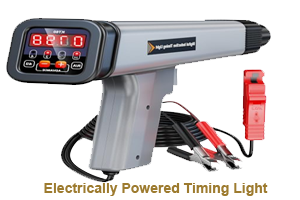 Classic petrol engines rely heavily on correct ignition timing for smooth running, efficiency, and engine longevity. Electric timing lights allow precise adjustment of static and dynamic timing, essential when setting up distributors, advancing curves, or tuning carburetted engines. Compared with static methods alone, timing lights provide real-world accuracy under running conditions, helping avoid detonation, overheating, and poor performance.
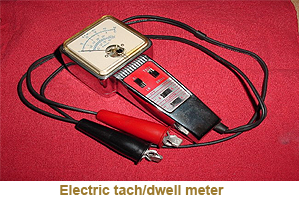 An electric tach/dwell meter measures engine speed (RPM) and distributor dwell angle by analysing ignition pulses. The dwell function indicates how long the breaker points remain closed during each ignition cycle.
For classic cars equipped with contact-breaker ignition systems, correct dwell angle is critical to coil saturation and ignition consistency. Electric tach/dwell meters allow accurate setting of breaker points and verification of idle and cruising RPM. This tool is especially valuable during ignition tuning, carburettor balancing, and fault diagnosis, providing insights that are otherwise difficult to obtain without modern engine management systems.
Hand-held electrically powered inspection, measurement, and setup tools offer significant advantages in classic car restoration. They provide precision without excessive dismantling, preserve original components, and reduce guesswork. Digital readouts, visual displays, and laser references allow restorers to work methodically and document findings for future reference.
By enabling better assessment, more accurate setup, and informed restoration decisions, electrically powered inspection and measurement tools play a crucial role in achieving reliable, authentic, and high-quality results. They ensure that classic vehicles are not only visually restored but mechanically sound, correctly aligned, and tuned to perform as their original designers intended.

to4