
Hand-held electrically powered welding and metal-joining tools are among the most fundamental items to be found in a classic car restoration and maintenance workshop, playing a major part in bringing these iconic vehicles back from the past and into the future.
From structural chassis repairs to delicate body-panel work, hand held electric welding tools allow restorers to recreate factory-correct joints, repair corrosion damage, and fabricate replacement components with accuracy and control. In a classic-car workshop—where thin-gauge steel, mixed metals, and originality are constant concerns—the correct selection and use of welding and cutting equipment is critical.
The most commonly used electrically powered tools include MIG welders, TIG welders, stick welders (MMA), plasma cutters, and spot welders.
MIG welding is the most widely used method in restoration workshops due to its versatility and ease of use. It is particularly well suited to thin automotive sheet steel, such as floor pans, sills, wings, and boot floors. Short, controlled tack welds allow panels to be stitched together while minimising distortion—an essential requirement when preserving original body lines.
MIG welders are also effective for plug welding, which closely replicates factory spot welds when replacing panels. Their speed and reliability make them ideal for day-to-day repair and fabrication tasks.
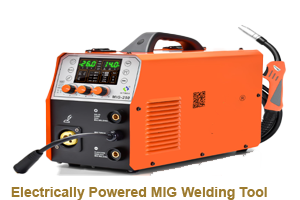 Operating through feeding a continuous consumable wire electrode through a hand-held torch while an electrically generated arc melts the wire and the base metal, while an inert or semi-inert shielding gas—typically argon-based—protects the weld pool from atmospheric contamination. The MIG welding process is usually controlled via voltage and wire-feed speed, making it relatively easy to set up and repeat.
Using a non-consumable tungsten electrode to create the arc, while filler metal is added manually as required. TIG Welders (Tungsten Inert Gas / GTAW)’S weld area is shielded by an inert gas, usually pure argon. Heat input is controlled either by machine settings or a foot pedal, allowing extremely precise welding control.
 TIG welding is valued in classic car restoration and maintenance projects as a result of its precision and weld quality, making it an ideal tool for thin or visible components, when working on aluminium panels, stainless steel exhaust systems, brass fittings, and small fabricated parts.
TIG welding’s fine control over heat input reduces the risk of burn-through on fragile panels and produces clean, neat welds that often require minimal finishing.
In concours-level restorations, TIG welding is often chosen for components that will remain visible or require an authentic, finely finished appearance.
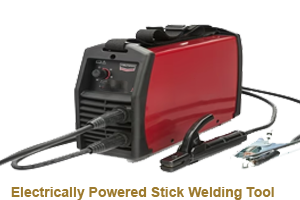 Stick Welders (Manual Metal Arc / MMA) uses a flux-coated consumable electrode that creates both the weld metal and a protective gas and slag when burned. The electrode is held in a clamp, and the arc is struck directly against the workpiece. Slag must be chipped away after welding.
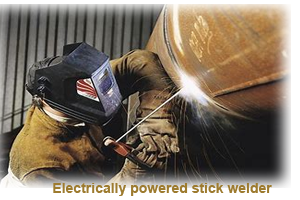 Although less commonly used on body panels, stick welding remains useful in structural and heavy-gauge repairs, such as chassis rails, suspension mounts, and period vehicle frames.
Stick welders are robust, portable, and tolerant of less-than-perfect metal surfaces, making them suitable for older vehicles where corrosion or contamination is present. For restorers working on early ladder-frame cars or agricultural-derived classics, MMA welding provides strong, reliable joints with relatively simple equipment.
Using a high-velocity jet of ionised gas (plasma) plasma cutters to cut through electrically conductive metals, by way of an electric arc which forms between the torch electrode and the workpiece, creating temperatures hot enough to melt metal while the gas blows molten material away from the cut.
Plasma cutters allow fast, clean, and precise cutting of steel, aluminium, and stainless steel, invaluable when removing rusted sections, cutting out damaged panels, or fabricating repair patches.
Compared to abrasive cutting discs, plasma cutting generates less vibration and heat spread, reducing the risk of panel distortion. The narrow kerf and accuracy make it easier to preserve surrounding original metal—an important consideration in sympathetic restorations.
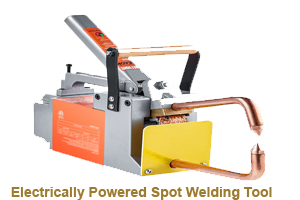 Spot welders are essential for authentic body-panel replacement. Many classic cars were originally assembled using spot welds along seams, flanges, and structural joints. Using a spot welder allows restorers to replicate factory construction methods accurately, improving both structural integrity and originality. Spot welding also produces minimal surface disruption, reducing the need for grinding or finishing and helping preserve panel strength.
Operated by the process of joining overlapping metal sheets by passing a high electrical current between two copper electrodes, spot welders eliminate resistance at the contact point through generating heat, fusing the panels together without filler material. Most automotive spot welders are hand-held, tong-style units or portable clamp-type machines.
Hand-held electrically powered welding and metal-joining tools form the backbone of any serious classic-car restoration workshop.
MIG welders provide speed and versatility for everyday repairs, TIG welders deliver precision and finish quality, stick welders offer strength for heavy structural work, plasma cutters enable efficient metal removal and fabrication, and spot welders preserve factory authenticity.
Used correctly, these tools allow restorers to balance structural safety, visual accuracy, and historical integrity, ensuring classic vehicles are repaired not just to function, but to endure for decades to come.

to4