Even though modern power tools are available, hand tools are still very important in a classic car restoration and maintenance workshop. Vehicles produced up to the Seventies were designed to be put together, adjusted, and repaired and maintained using manually operated hand tools. Many restoration tasks today still benefit from the accuracy, sensitivity, and control that hand tools give.
Aligning punches, chisels, saws, and snips is very important for keeping things original, protecting old materials from damage, and letting careful, reversible work be done on historic parts.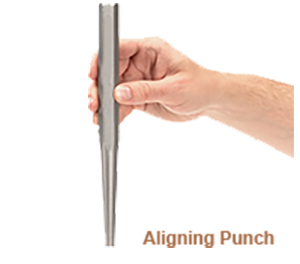 Aligning punches are very important when putting things back together. Before applying fasteners, these tapered tools are used to line up bolt holes in body panels, chassis members, suspension brackets, gearbox mounts and crossmembers. Allowing accurately accurate placement in classic cars, where tolerances may have changed because of age, rust, or previous repairs aligning punches. means that bolts do not need to be forced into holes that aren't lined up, which can cause strip threads or bend panels. When putting leaf spring shackles, engine mounts, or door hinges back on, aligning punches allow for gentle leverage which is very helpful.
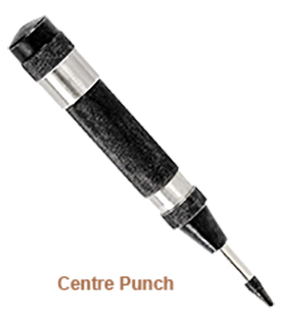 Restoring or maintaining a classic car often requires fabricating new repair panels, redrilling mounting holes, or replacing rivets. Having a centre punch on hand is invaluable for making a perfect starting dimple keeping drill bits from moving around on painted, plated, or bare metal surfaces. When working on body panels, dashboards, or original brackets centre punch that are easy to see, while producing unsurpassable levels of accuracy.
 Drift punches are also effective tools to have in a classic car restoration and maintenance workshop as they drive pins, bolts, and shafts in or out without damaging their ends. Often used to take apart brake parts, steering linkages, pedal boxes, and gearbox selectors, Drift punches are characterised by their blunt ends designed to spread force evenly, thus lowering the risk of mushrooming or bending delicate fasteners. Especially important when original hardware needs to be used again to keep the look of the piece.
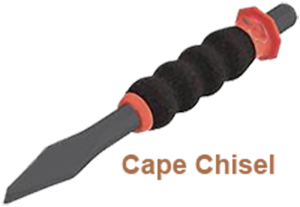 Cape chisels are chisels with narrow blades designed for cutting precise channels, keyways, and slots Often used to clean out rusty seams, open spot-welded joints, or get rid of stuck fasteners where space is tight, cape chisels are. shaped to allow for easy removal of waste material in tight spaces, such as door frames, floorpan seams, and suspension mounts, without causing too much damage to other things.
Splitting chisels, also known as panel or seam chisels, are similar to cape chisels but wider and thinner. Used to separate parts that are already connected Splitting chisels are very useful for taking apart panels together with spot welds, seam sealer, or rust.
Cape chisels are chisels with narrow blades designed for cutting precise channels, keyways, and slots Often used to clean out rusty seams, open spot-welded joints, or get rid of stuck fasteners where space is tight, cape chisels are. shaped to allow for easy removal of waste material in tight spaces, such as door frames, floorpan seams, and suspension mounts, without causing too much damage to other things.
Splitting chisels, also known as panel or seam chisels, are similar to cape chisels but wider and thinner. Used to separate parts that are already connected Splitting chisels are very useful for taking apart panels together with spot welds, seam sealer, or rust.
Gasket punches are tools whose role it is to punch out clean, precise holes in gasket material. Restorers or maintenance crew can produce custom gaskets for carburettors, fuel pumps, thermostats, gearboxes, and differential covers with gasket punches, with accurate hole placement ensuring that the seal is tight and that there are no leaks.
Different from gasket punches while carrying out a similar function, hole punches, are used to cut clean holes in thin sheet metal, rubber, leather, and trim materials. Especially helpful for making holes in carpets, door cards, headliners, and rubber grommets when restoring the inside of a car, Hole punches produce professional-looking holes identical to those that are factory produced, that neither shear nor tear.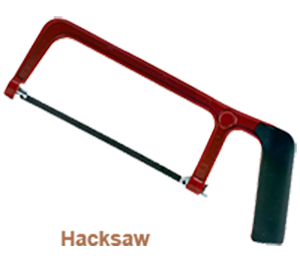 Around for decades, hacksaws remain among the most useful cutting tools in a restoration shop. Used to cut metal bars, tubing, bolts, exhaust sections, and stuck fasteners when power tools might not be safe or accurate, hacksaws provide improved control when working near original parts, wiring, or fuel lines, whilst making angled or partial cuts that would be difficult to emulate with powered tools.
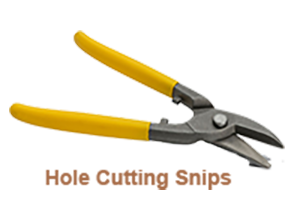 Hole-cutting snips are an invaluable tool to have for shaping repair panels, trimming brackets, or making holes for ventilation. Working most effectively on thin sheet steel, aluminium, or brass, hole-cutting snips allow for increased control, considerably lowering the risk of cracking old, brittle metal, while being. especially helpful for making small patches or brackets when doing body and interior work.
For classic restoration and maintenance, hole saws come in very useful when the job is producing large but precise holes to contain objects such as gauges, wiring grommets, heater ducts or fuel fillers. Hole saws allow for adding new openings while retaining the symmetry and strength of the structure if used you use them carefully.
Hole-cutting snips are an invaluable tool to have for shaping repair panels, trimming brackets, or making holes for ventilation. Working most effectively on thin sheet steel, aluminium, or brass, hole-cutting snips allow for increased control, considerably lowering the risk of cracking old, brittle metal, while being. especially helpful for making small patches or brackets when doing body and interior work.
For classic restoration and maintenance, hole saws come in very useful when the job is producing large but precise holes to contain objects such as gauges, wiring grommets, heater ducts or fuel fillers. Hole saws allow for adding new openings while retaining the symmetry and strength of the structure if used you use them carefully.
These are manually operated hand tools that can be described as the most important in a classic car restoration and maintenance workshop, allowing for parts to be cleanly dissembled, make things accurately, and put them back together in a way that is kind to the vehicle—traits that are very important when working with old cars. These tools are still useful today because they work, but also because they respect the materials, craftsmanship, and engineering philosophy of the time being restored.
 ,
,