 In a classic car restoration and maintenance workshop, manually operated pliers are among the most versatile and frequently used hand tools.
Many of the tasks in a classic car restoration and maintenance workshop are pliers carried out with pliers that offer precision, control, and tactile feedback. From engine rebuilding and electrical work to body restoration and cooling-system servicing, a wide range of pliers play essential and highly specialised roles.
General purpose pliers form the backbone of everyday workshop activity. Used for gripping, twisting, pulling, and holding components, they are constantly employed during dismantling and reassembly. Whether removing split pins, holding small fasteners, or manipulating linkages, general purpose pliers provide a reliable all-round solution for countless routine tasks.
Designed to access awkward or recessed areas where straight pliers cannot reach in classic cars, angle-nose pliers are invaluable for working behind dashboards, inside door cavities, and around carburettors or distributor assemblies. The angled jaws of make for precise control when springs or wiring connectors.
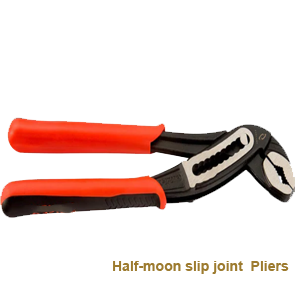 Half-moon slip joint pliers provide adjustable jaw spacing, making them the ideal tool gripping components of varying sizes. Commonly used on fuel line repairs, heater hoses and suspension bushes, the adaptability of the angle-nose plier makes them the tool of choice when working on classic cars with non-standard or previously modified components.
 Essential for fine, delicate work, the slim jaws of the long-nose plier allow easy access when working in confined spaces and enable precise manipulation of small parts. In classic car restoration and maintenance, long-nose pliers are commonly used for installing springs, routing wiring, and adjusting throttle or choke linkages.
Long-nose self-grip pliers combine the reach of long-nose pliers with a locking mechanism, particularly useful when a component must be held securely for an extended period, such as during soldering, brazing, or alignment tasks. Long-nose self-grip pliers are commonly used for holding cables, rods, or thin brackets during fabrication or repair work.
Designed for cutting wire, cable ties, and small fasteners, heavy-duty diagonal cutting pliers are widely used in electrical restoration for trimming wiring, cutting old loom ties, and removing corroded clips. The strength of the heavy-duty diagonal cutting plier allows them to deal with hardened wire without damaging the cutting edges.
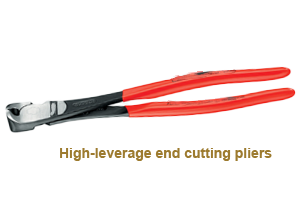 High-leverage end cutting pliers are specialised tools used for cutting flush to a surface. They are particularly useful when removing nails, pins, or rivet tails during interior and body restoration, in classic vehicles with wooden frames or floorboards, Heavy-duty diagonal cutting pliers are often used to remove old fixings cleanly without the risk of damaging surrounding material.
Used for shaping wire, thin rod, and small metal sections, on restoration work, bending pliers are invaluable for forming brake pipe clips, fuel line retainers, cable brackets, and custom fasteners. Their controlled bending action allows accurate shaping without kinking or weakening the material.
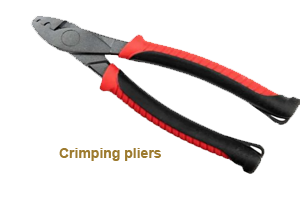 Crimping pliers play a major role in electrical system restoration. Many classic cars rely on bullet connectors, spade terminals, and ring connectors that must be securely crimped to ensure reliable electrical performance. Proper crimping pliers consistently produce joints that are vibration-resistant, helping to avoid intermittent faults—a common issue in older vehicles.
 Used to install grommets, eyelets, and reinforcement rings in trim materials Eyelet pliers are essential during interior restoration, particularly when working on carpets, door cards, tonneau covers, and soft tops. Eyelet pliers allow trim components to be finished neatly and securely, closely replicating original factory workmanship.
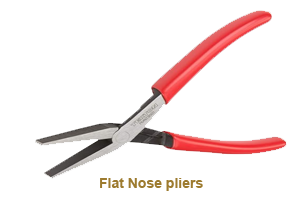 Flat-nose pliers provide broad, flat jaws that distribute pressure evenly making them ideal for holding delicate components, flattening tabs, and adjusting trim fittings without marking surfaces. Commonly used when working with chrome trim, aluminium mouldings, and interior fittings where cosmetic damage must be avoided Flat-nose pliers are a very common tool found in classic car restoration and maintenance workshops.
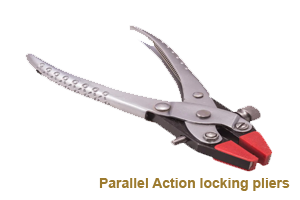
Offer a major advantage over conventional locking pliers through their ability to grip components evenly across the jaw faces, parallel action locking pliers are. particularly useful when clamping sheet metal, holding panels during welding or bonding, or gripping thin-walled tubing. In classic car restoration, parallel action locking pliers help prevent distortion and crushing of fragile components.
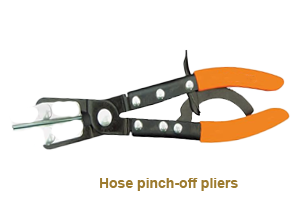 Hose pinch-off pliers are essential for cooling and fuel system maintenance, allowing flexible hoses to be temporarily sealed without draining fluids, making them ideal for water pump replacement, carburettor work, or heater valve servicing. By preventing fluid loss, their parallel action locking allows for the reduction of wastage while minimising the risk of introducing air into the system.
Specifically designed for gripping and removing stubborn hoses the radiator hose shark tooth pliers’ serrated jaws grip rubber holds hoses securely without excessive crushing, making them ideal for removing old, hardened radiator or heater hoses, an important factor in the restoration of classic vehicles/
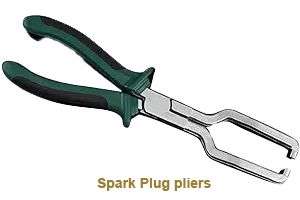 Spark plug pliers are insulated and ergonomically designed to grip spark plug leads safely. In classic ignition systems, where high-voltage components are often exposed, the role of spark plug pliers is to protect the operator while allowing plugs and leads to be removed or tested with the engine running.
Specialised tools used during engine servicing, particularly on overhead cam engines that use shim-based valve adjustment, valve shim pliers allow shims to be removed and installed accurately without damaging the camshaft or valve train—an important consideration when working with precision engine components.
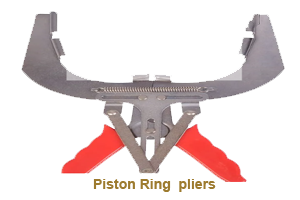 Piston ring pliers are essential during engine rebuilding, allowing piston rings to be expanded and fitted without distortion or breakage. Given the scarcity and cost of replacement rings for many classic engines, the controlled action of piston ring pliers is crucial for preserving components and ensuring correct engine assembly.
Manually operated pliers are fundamental to the operation of a classic car restoration and maintenance workshop. Their diversity allows restorers to grip, cut, bend, crimp, clamp, and manipulate components with precision and sensitivity. By providing control that power tools often lack, pliers help preserve original materials, replicate period-correct workmanship, and ensure reliable, high-quality repairs.
