In a workshop for restoring and maintaining historic cars, screwdrivers that can be manually operated remain among the most basic and most utilised hand tools. In the days when classic cars were produced using conventional methods, threaded fasteners were inserted put in and taken out by hand, usually into softer metals, wooden frames, or thin steel panels making it important to have ability
to carefully adjust the feel, alignment, and torque.
Even though there are modern powered drivers, the bast majority of classic car maintenance and restoration professionals still opt for manual screwdrivers to avoid damaging parts that can't be replaced and to copy how things were done in the past.
Each type of screwdriver has a unique and significant job. For example, angle screwdrivers, ball end hexagon screwdrivers, chubby screwdrivers, flat-bladed screwdrivers, magnetic screwdrivers, Phillips screwdrivers, and offset screwdrivers all have their own jobs.
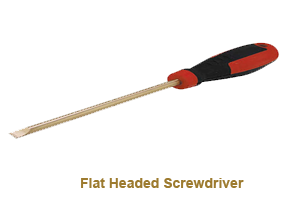 The flat-bladed screwdriver is probably the most crucial tool to be found in a classic car restoration and maintenance workshop. Many vintage cars ( produced before World War II) and many from after use slotted screws a lot in their bodywork, interiors, carburettors, electrical parts, and trim. Flat-bladed screwdrivers are used to fix things on the dashboard, instrument panel, door handles, hose clips, carburettor jets, and ignition parts. Choosing the right blade width and thickness is very important in restoration work and if they are handled carefully, flat-bladed screwdrivers can also be used as light prying or alignment tools, which makes them quite useful.
In recent years magnetic screwdrivers have swung into prominence as they are especially useful when operating in tight or hard-to-reach places. Classic cars frequently don't have much room behind the dashboard, in the door cavities, or in the engine compartment because of all the extra equipment. A magnetic tip keeps screws in place while they are being taken out and put back in, so they don't fall into hard-to-reach places
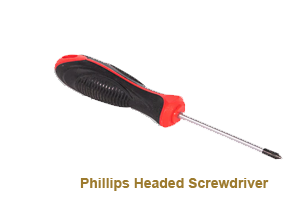 Phillips head screwdrivers became increasingly popular from the Fifties onwards classic car restoration and maintenance workshops use Phillips screwdrivers a lot on electrical parts, heater assembly, trim fixes, and things inside the house. When used appropriately, Phillips head make it less likely that screws will come out when they are being tightened, as long as the screws are tightened manually as a lot of Phillips screws in old cars are made of soft steel.
 Made for high torque and working in tight spaces Chubby screwdrivers earned their title because of their short shafts and thick handles. When working on classic cars it is fairly common to come across screws that are stuck in place like those on carburettor bodies, brake parts, hose clips, and engine parts that aren't working right. The big handle allows for the application for increased torque while keeping a firm grip, lowering the chance of slipping and damaging adjacent parts. The Chubby’s compactness also makes them great for working in tight spaces like engine bays and under dashboards.
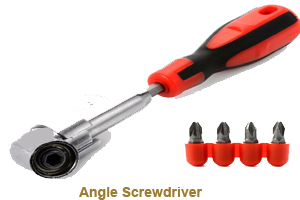 Angle screwdrivers are made to get to screws that are at odd angles that a straight screwdriver can't reach. Classic cars often have these kinds of problems because they are small and don't have many contemporary service access points. When working on heater boxes, pedal assemblies, seat runners, and body fittings where other parts get in the way, angle screwdrivers are quite useful. They save time and lower the chance of collateral damage by letting you tighten and loosen things without taking off nearby parts.
Like angle screwdrivers, offset screwdrivers can be used for the same things, but their Z- or L-shaped design makes them more flexible. They are very helpful for taking out and putting in screws that are near to bulkheads, chassis rails, or body panels. Offset screwdrivers are typically employed in restoration work on brake master cylinders, clutch linkages, exhaust heat shields, and underbody fittings. During both taking apart and putting back together, they are quite useful since they can apply torque in tight locations.
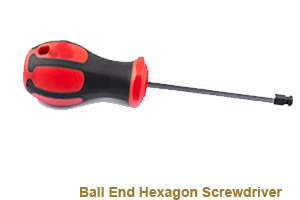 Ball end hexagon screwdrivers are specific tools for hex socket fasteners, which are common on antique cars from the later years or on parts that were installed during prior repairs. The ball end lets the tool grab the fastener at an angle, which makes it great for tight areas. These screwdrivers are often used on alternator brackets, gearbox covers, aftermarket carburettor fittings, and suspension parts while working on old cars. Their tilted engagement makes it less necessary to take apart nearby pieces just to get straight-line access.
One of the best things about screwdrivers that you have to use by hand is how much control they provide you. Aluminium, brass, and zinc alloys, as well as wood and thin sheet steel, are common materials used in classic cars. Power drivers can easily over-tighten screws, which can peel threads or break castings. Manual screwdrivers let the restorer feel when a screw is in the right place, which keeps the original threads and parts intact.
