
In a classic car restoration and maintenance workshop, the use of manually operated socket tools form a very basic part of everyday mechanical work. The reason why is that classic vehicles were produced using a wide variety of fastener types, made up from ng materials and thread formats that require care, precision, and mechanical sympathy to work around.
Experienced classic car restorers and maintainers frequently rely on hand-driven sockets to maintain control, protect original components, and avoid damage to irreplaceable fasteners, sufficient reasons to have a comprehensive socket set on hand, covering different profiles, depths and specialist designs.
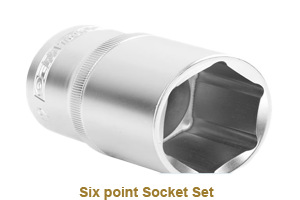 Six-point sockets are probably the most fundamental when it comes to classic car restoration and maintenance projects. The six-point socket design is capable of gripping the flat sides of a nut or bolt head, providing maximum contact and while reducing the risk of rounding. This factor is especially important when dealing with aged, corroded, or soft fasteners commonly found on classic engines, suspension components, and chassis fixings. Six-point sockets are typically the first choice for dismantling stubborn or original hardware.
Offering increased flexibility, as they can engage a fastener at twice as many angles, twelve-point sockets have been consistently found to be ideal for working in confined spaces where socket positioning is limited, such as engine bays, gearboxes and under-dash areas, sockets are ideal for working in confined spaces where socket positioning While they offer less grip than six-point sockets, twelve-point sockets are ideal for working in confined spaces where socket positioning is limited. making them invaluable when it comes to fitting fasteners in good condition and for rapid reassembly work.
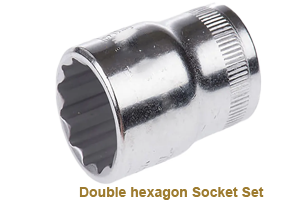 Double hexagon sockets, often similar in function to twelve-point sockets, are particularly useful for fasteners that require frequent engagement and disengagement. In classic car restoration and maintenance workshops, double hexagon sockets they are commonly used on fitting drivetrain components and suspension fittings where access angles are restricted, providing levels of versatility that considerably reduces the need for repeated repositioning of the tool.
In the case where fasteners sit close to the surface and clearance is limited, shallow sockets are ideal for working on engine accessories, carburettor mountings and interior fixings, with their compact length improves access and control.
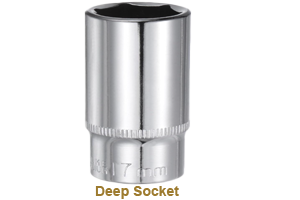 Deep sockets are essential tools when it comes to accessing nuts which are located on long studs, such as exhaust manifolds, cylinder heads, and wheel studs. Many classic cars use long threaded studs rather than bolts, making deep sockets indispensable for safe removal and installation without damaging exposed threads.
 Although designed for powered tools, impact sockets are often used manually in classic car restoration and maintenance workshops thanks to their thicker walls and higher strength. Impact sockets are particularly useful for removing stubborn or heavily corroded fasteners where a breaker bar is required. The durability of the impact socket reduces the risk of socket failure, making them a crucial tool for high-torque applications such as crankshaft bolts, hub nuts, and suspension fasteners.
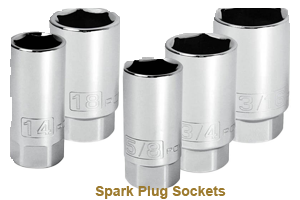 Spark plug sockets are specialist tools designed to grip spark plugs securely while protecting fragile ceramic insulators. Many spark plug sockets include rubber inserts or magnetic retainers to prevent plugs from dropping into engine bays or damaging threads during installation. In classic car restoration and maintenance projects, where engines may have aluminium cylinder heads and limited access, spark plug sockets are essential for routine servicing and tuning.
While not common on early classics, the use of Torx and spline sockets have become increasingly relevant in classic vehicles produced in the Sixties and onwards as well as vehicles that have undergone period or modern upgrades. Torx and spline sockets are often required for alternators, brake components, gearbox fasteners, and aftermarket parts. Having Torx and spline sockets available ensures that non-standard fasteners can be serviced correctly without resorting to improvised or damaging methods.
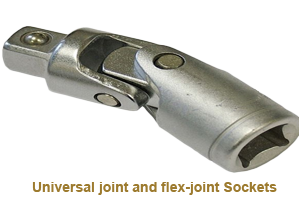 Universal joint and flex-joint sockets play a crucial role in accessing fasteners at awkward angles. Classic vehicles often lack the service clearances found in modern designs, making these sockets invaluable for working on exhaust systems, steering components, and engine mounts. Universal joint and flex-joint sockets allow torque to be applied smoothly while accommodating misalignment between the tool and fastener.
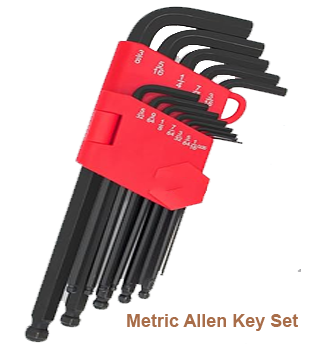 Hexagonal bolsters and hexagon keys (Allen keys) are vital for fasteners recessed into housings or requiring direct hand control. Many classic components—such as brake calipers, carburettor fittings, and gearbox covers—use internal hex fasteners. Hexagonal bolsters allow higher torque to be applied with a spanner, while hex keys are ideal for precision work and adjustments.
The primary advantage of manually operated sockets lies in the control they provide. Classic vehicles often feature soft metals, aged threads, and original fasteners that cannot easily be replaced. Hand tools allow restorers to feel resistance, detect binding, and stop before damage occurs.
