 In the classic car restoration and maintenance workshop of today, manually operated clamps are one of the most important tools, although they are often regarded as a bit of a curiosity, and often don't get a lot of praise.
Modern workshops may use jigs, hydraulic fixtures, or powered holding systems, but classic cars were put together with simple mechanical clamps, and many restoration jobs still need their controlled, tactile grip. Bar clamps, g-clamps, G-clamps, locking bar clamps, locking clamps, long-reach g-clamps and piston ring clamps all have their own important jobs in bodywork, mechanical assembly, interior restoration and rebuilding engines.
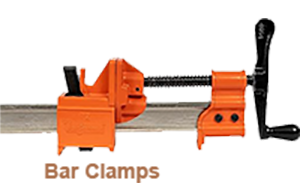 Bar clamps are necessary for jobs that need to apply even pressure over a large area. In body restoration, they are often used to keep repair panels, sill sections, and floorpan patches perfectly lined up before welding or riveting. Well suited for applying for door skins, bonnet frames, and boot lids bar clamps e they can reach far and have jaws that can be moved closer together or farther apart. Bar clamps are particularly useful for woodworking tasks in classic cars, in particular to hold laminated dashboards, door cappings and veneered trim in place while the glue dries.
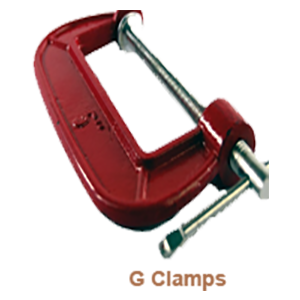 In the classic workshop, both C and G-clamps are especially useful holding things in place because they are small and have a strong screw mechanism. Often used to hold parts in place on benches while drilling, filing, or tapping to make sure everything is safe and accurate both C and G-clamps hold brackets, gussets, and flanges in place when welding or brazing jobs are taking place. G-clamps are often used in suspension and brake work to compress springs, hold brake hoses temporarily, or hold callipers while they are being serviced.
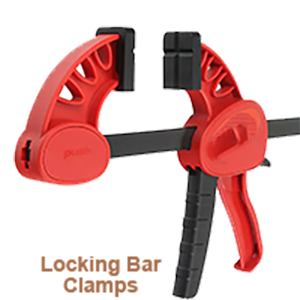 Locking bar clamps have the same reach as a bar clamp and the same quick action locking mechanism as a vice grip. Especially helpful during the mock-up and trial fitting stages, when parts need to be moved, checked, and moved repeatedly, locking bar clamps are often used in classic restoration to line up exhaust sections, fuel tanks or body panels before they are finally fixed.
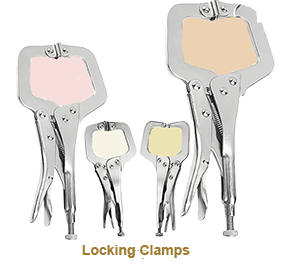 Locking clamps also known as locking pliers or mole grips provide a very vital function in both classic car restoration and maintenance. Used to hold parts that are not shaped like a normal clamp, like round tubing, brackets that don't fit together, or fasteners that are stuck. Particularly functionable when plug welding or spot-weld simulation, bodyworkers often use locking clamps to hold overlapping panel edges together while being found very useful for spot repairs either at the side of the road or in the workshop, where a temporary but secure grip Is required.
 Long-reach g-clamps designed to help classic car restorers and maintainers to reach difficult places. When restoring classic cars, long-reach g-clamps are especially useful for working on boxed sections, chassis rails, door frames, and bulkheads. Because their throats are longer, classic car restorers and maintainers are capable of applying pressure far away from the edges of the panels, lowering the risk of the metal becoming distorted. Often used to hold the inner and outer panels together while structural repairs are being made, Long-reach g-clamps ensure that the metal layers are lined up correctly.
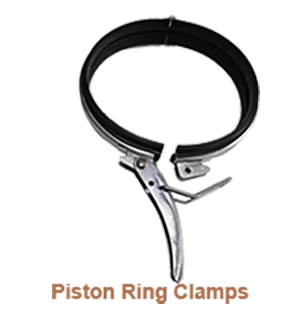 Piston ring clamps are a very important part of rebuilding an engine. Many classic car engines are fitted with cast pistons that are brittle and rings that are thin and fragile. If you don't handle them right, they can break easily. A piston ring clamp evenly squeezes the rings around the piston so that it can be put into the cylinder bore without chipping or breaking the rings. When rebuilding original engines, where replacement parts may be hard to find or too expensive, this controlled compression is very important.
Clamps, in their various formats, continue to play a major role in any classic car restoration and maintenance shop providing control, flexibility, and dependability.
