Before and during any classic car maintenance and maintenance project, effective cleaning and preparation must be taken care of as it underpins every stage in the project.
Decades of build-up of corrosion residue, dirt, grease and old coatings must be removed, using dedicated cleaning, degreasing, and preparation equipment. This vital task, not only improves the quality of restoration work but also protects tools, reduces rework whilst often revealing hidden defects.
 These days, effective cleaning and preparation has become a much simpler and less back-breaking task thanks to the development of electrically powered cleaning equipment that combines to offer consistency, control, and safety, well suited to the demands of classic vehicles.
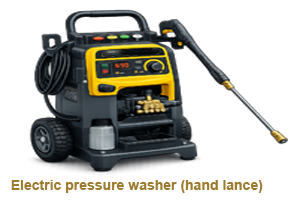
One of the most versatile cleaning tools in a restoration workshop is the electric pressure washer (hand lance). that allows for rapid removal of heavy grime, mud, oil residue, and old underseal from chassis, suspension components, engine bays, and wheel arches. Compared with manual cleaning, a pressure washer significantly reduces labour time while providing consistent results, while allowing the operator precise pressure control, making it suitable for working on classic car, where the risk of using excessive force that could damage fragile components or seals is much higher.
 For more delicate or detailed cleaning tasks, the electric steam cleaner (handheld) provides distinct advantages. Steam cleaning uses heat and moisture to break down grease and contaminants with minimal chemical use, making the electric steam cleaner ideal for engine compartments, interior metalwork and other sensitive assemblies where harsh solvents are undesirable, particularly effective for cleaning complex shapes, seams, and crevices while reducing water usage and drying time.
For drying and clearing operations, electric blowers have always proved themselves very useful in such tasks as clearing dust from panels before painting, drying components prior to inspection or assembly removing excess water after washing. Unlike compressed air, electric blowers provide consistent airflow without introducing moisture or oil into sensitive areas. This makes them especially useful during final preparation stages.
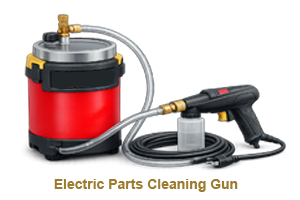
 Component-level cleaning benefits greatly from the electric parts cleaning gun, ideally suited for spraying cleaning fluids under controlled pressure, allowing grease and oil to be removed from mechanical parts such as brackets, housings, suspension components and fasteners, reducing solvent waste while improving cleaning efficiency.
For the precision cleaning of intricate components, the electric ultrasonic cleaner has become an invaluable tool in recent years. Using use high-frequency sound waves to agitate cleaning solutions, dislodging contaminants from internal passages and fine details that cannot be reached manually. ultrasonic cleaners are them ideal for carburettors, bearings, electrical components, fuel injectors and various small engine parts. In classic car restoration and maintenance project, where parts are often fragile, ultrasonic cleaning provides thorough results without mechanical abrasion.
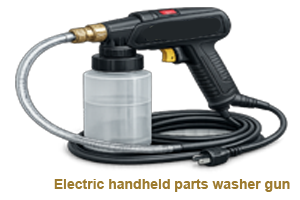
 Bridging the gap between large-scale cleaning and precision work, the electric handheld parts washer gun. allows targeted cleaning of specific areas, such as bolt holes, gasket surfaces and machined faces, without the need to fully immerse, making them especially useful during engine rebuilds and gearbox servicing, where cleanliness is critical to reliability.
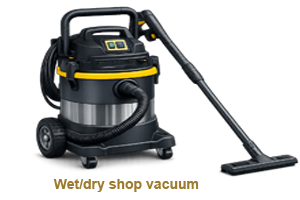 Beyond individual tools, the overall advantage of dedicated cleaning and preparation equipment lies in consistency and quality control. Clean components are easier to inspect, allowing cracks, corrosion, and wear to be identified early. Proper degreasing improves adhesion of paints, sealants, and coatings, leading to longer-lasting finishes and reduced rework.
Electric cleaning equipment also provides a long list of practical benefits in terms safety and maintenance. When compared to traditional petrol-powered or compressed-air systems, electric tools have proven the most effective popular as they are quieter, easier to control, and require less infrastructure, integrating well into modern workshops and are suitable for continuous use in enclosed environments.

- Vehicle Lifting and Support Equipment
- Compressed Air System Equipment
- Electrical and Power Infrastructure
- Welding and Fabrication Equipment
- Metalworking and Fabrication Equipment
- Cleaning, Degreasing and Preparation Equipment
- Engine and Mechanical Workshop Equipment
- Bodywork,Paint and Finishing Equipment
- Sanding, Preparation and Rust Control Equipment
- Tyre, Wheel and Suspension Equipment
- Fuel, Cooling and Fluid Handling Systems
- Exhaust and Emissions Equipment
- Electrical and Diagnostic Equipment
- Storage and Workshop Furniture
- Safety, Environmental and Compliance Equipment
- Comfort, Workflow and Support Infrastructure
-
eq4