 The ability and the facilities to provide welding and fabrication services remain at the core of most classic car restoration and maintenance projects, involving the replacement of entire rusted structural sections as well as to join, cut, and shape metal accurately is essential. Because classic cars of the Fifties and Sixties were often produced using thinner material with construction methods that differed from vehicles produced today, means that having the correct range of welding and fabrication equipment is critical for achieving strong, authentic, and long-lasting repairs.
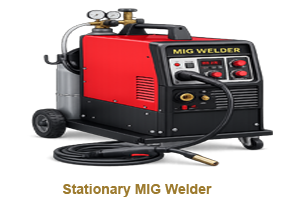 The MIG welder (stationary) is one of the most widely used tools in a restoration workshop, providing versatility, relatively ease of set up, the MIG welder is well suited to dal with mild steel body panels, chassis repairs, and general fabrication, offering consistent power delivery and duty cycle, making it ideal for long repair sessions such as sill replacements or floor pan installation. MIG welding, with proper adjustment, allows controlled heat input, reducing the risk of panel distortion on thin, aged steel commonly found on classic cars.
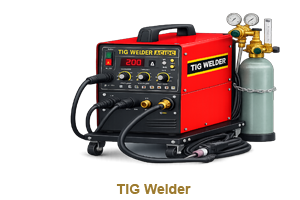 For more specialised and precision work, the TIG welder (AC/DC, fixed location) is invaluable. TIG welding provides exceptional control over heat and weld pool size, making it ideal for delicate repairs, visible joints, and work on aluminium, stainless steel, and thin-gauge steel. AC capability allows aluminium welding, while DC is used for steel and stainless components. In a fixed workshop location, a TIG welder becomes a precision tool for fabricating brackets, repairing alloy panels, and achieving clean, factory-quality welds where appearance matters as much as strength.
 Authenticity is often a key goal in restoration, and the spot welder (floor-standing or bench-mounted) plays an important role in replicating original factory construction methods. Many of the UK and European car manufactures of the Fifties and Sixties used spot welding extensively for joining panels, flanges, and structural seams.
Having access to a spot welder allows restorers and maintenance teams to recreate these joints accurately while preserving originality and maintaining structural integrity. A floor-standing spot-welding unit is guaranteed to provide higher clamping force for larger panels, while bench-mounted versions are ideal for smaller components and sub-assemblies.
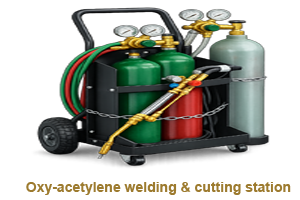 Traditional techniques in welding remain relevant, and the oxy-acetylene welding & cutting station offers versatility unmatched by many modern tools. Oxy-acetylene equipment can be used for welding, brazing, heating, straightening, and cutting. Particularly useful for freeing seized fasteners, heating panels for reshaping, and performing traditional lead-loading repairs, oxy-acetylene equipment is [particularly useful in restoration work, where controlled heat application is often required rather than outright cutting, oxyacetylene remains a highly adaptable solution.
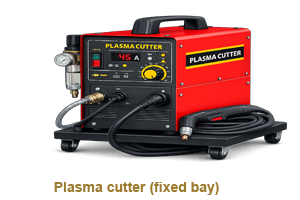 For fast, clean cutting of metal, the plasma cutter (fixed bay) is a major efficiency booster. Plasma cutters allow precise removal of rusted sections, fabrication of repair panels, and trimming of brackets with minimal heat distortion compared to oxyfuel cutting. A fixed bay installation ensures adequate power supply, ventilation, and safety controls, making plasma cutting a reliable, repeatable process within the workshop.
More important as the welding equipment itself are the safety and working conditions in which they are operated. Any workshop using any form of welding equipment must have a dedicated welding fume extraction system. Welding fumes contain harmful particulates and gases, and even more so when working on old painted or coated metal. Effective extraction not only protects technicians’ health but also improves air quality, whilst helping to meet safety regulations, allowing welding to be carried out for extended periods without compromising the wellbeing of the operator.
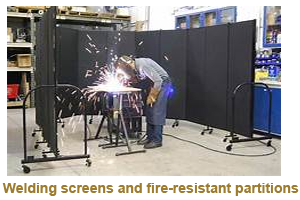 Equally important to the workshop personnel are welding screens and fire-resistant partitions, that provide physical separation between welding areas and the rest of the workshop, through reducing the risk of ignition when working near flammable materials. Welding screens will improve overall workflow by allowing multiple tasks to take place simultaneously without interference.
From the everyday versatility of a stationary MIG welder to the precision of an AC/DC TIG welder and the authenticity provided by spot welding, each tool plays a distinct role. Combined with proper cutting equipment, fume extraction, and safety infrastructure, these systems enable restorers to repair, fabricate, and preserve historic vehicles to a professional and authentic standard.

- Vehicle Lifting and Support Equipment
- Compressed Air System Equipment
- Electrical and Power Infrastructure
- Welding and Fabrication Equipment
- Metalworking and Fabrication Equipment
- Cleaning, Degreasing and Preparation Equipment
- Engine and Mechanical Workshop Equipment
- Bodywork,Paint and Finishing Equipment
- Sanding, Preparation and Rust Control Equipment
- Tyre, Wheel and Suspension Equipment
- Fuel, Cooling and Fluid Handling Systems
- Exhaust and Emissions Equipment
- Electrical and Diagnostic Equipment
- Storage and Workshop Furniture
- Safety, Environmental and Compliance Equipment
- Comfort, Workflow and Support Infrastructure
-