
A reliable, well-planned auto-electrical and power infrastructure department is fundamental to the safe, efficient operation of a classic car restoration and maintenance workshop.
Managing restoration and maintenance projects requires the combination of traditional craftsmanship with the ability to understand and operate modern equipment, often running multiple machines simultaneously for long periods.
Without an in-house and robust electrical system, workshop productivity will inevitably suffer, safety risks will increase, and the quality of work can be compromised, meaning that investing in a state-of-the-art power infrastructure should be very carefully considered, as it will ensure that the equipment and those who operate it can extract the highest quality work.
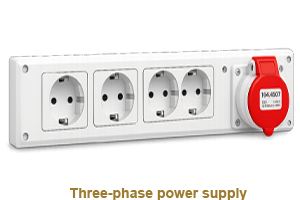 At the core of a professional auto-electrical workshop is usually it’s three-phase power supply. It is generally accepted that single-phase power may suffice for operating basic hand tools and lighting, the bulk of restoration and maintenance projects rely on equipment that demands higher, more stable power delivery. These range from compressors, welding equipment, vehicle lifts, spray booth systems and machine tools all of which operate more efficiently and reliably on three-phase power.
 A three-phase power supply provides smoother motor operation, higher torque, and reduced electrical strain, all of which are important when working with the heavy machinery or precision equipment in common use on medium to large scale in classic car restoration and maintenance projects.
Electrical power from the mains is managed through an industrial distribution board, acting as the central control point for the workshop’s electrical system.
Unlike domestic consumer units, industrial boards are designed to handle higher loads, multiple circuits, and diverse equipment types, allowing power to be safely while incorporating appropriate protection such as breakers and residual current devices. Making sure that clear labelling and logical layout is in place will make fault-finding and maintenance far easier thus reducing downtime.
 Daily usability is greatly enhanced by strategically placed wall-mounted power outlets. Classic car restoration often involves working around the entire vehicle—inside, underneath, and around the perimeter. Having ample outlets positioned at convenient heights reduces the need for trailing extension leads, improving safety and efficiency.
Outlets situated adjacent to workbenches, lifts and areas used for fabrication allow power tools to be plugged in quickly and kept close at hand, making for a tidy and well organised workspace.
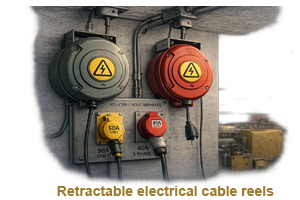 To further improve flexibility, retractable electrical cable reels are a valuable addition. Mounted on walls or ceilings, these reels allow power cables to be extended only when required and neatly retracted when not in use. Keeping the workshop floors clear of trip hazards and preventing cable damage, particularly important in busy workshops where vehicles and equipment are constantly being moved. Cable reels also speed up transitions, as power can be brought to the work area instantly.
High-load equipment such as welders, compressors, and heavy machine tools benefit from easy access to isolated circuits when using welding equipment or heavy machinery, with these dedicated circuits preventing voltage drops and electrical interference that often affect other tools or sensitive equipment.
Well planned electrical systems will also enhance safety, allowing specific machines to be shut down for maintenance without disrupting the rest of the workshop.

- Vehicle Lifting and Support Equipment
- Electrical and Power Infrastructure
- Welding and Fabrication Equipment
- Metalworking and Fabrication Equipment
- Cleaning, Degreasing and Preparation Equipment
- Engine and Mechanical Workshop Equipment
- Bodywork,Paint and Finishing Equipment
- Sanding, Preparation and Rust Control Equipment
- Tyre, Wheel and Suspension Equipment
- Fuel, Cooling and Fluid Handling Systems
- Exhaust and Emissions Equipment
- Electrical and Diagnostic Equipment
- Storage and Workshop Furniture
- Safety, Environmental and Compliance Equipment
- Comfort, Workflow and Support Infrastructure
-