The concept of classic car restoration and maintenance workshops may conjure a picture of olde world charm, but it does mean a lot of potentially dangerous situations. Working in close proximity to heavy machinery, flammable materials and chemical processes and often within enclosed spaces is something that has to be taken seriously.
While craftsmanship and technical skill are central to successful restoration, safety, environmental responsibility and regulatory compliance are no less important. Adhering to the rules of dedicated safety and compliance equipment will protect personnel, preserve valuable vehicles while ensuring that the workshop will operate responsibly and sustainably.
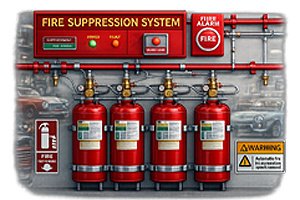 Fire risk is one of the most serious hazards in a restoration environment, making a fire suppression system essential. Welding, grinding, fuel handling, and paint operations all introduce ignition risks, particularly when working on vehicles with decades of accumulated residues.
Suppression systems, which can be automatically or manually activated will provide rapid response to outbreaks of fire, limiting damage while providing protection both for personnel and the vehicles been worked on or stored in the workshop. Capable of being tailored to specific risks, integrated systems can cover such areas as paint booths or storage areas, offering targeted protection.
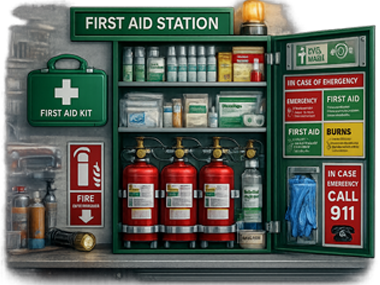 The risk of exposure to dangerous chemicals is another principal concern, and preventive measures such as emergency eyewash stations on hand to provide immediate first-line response to splashes involving acids, brake fluids, solvents or degreasers. Rapid access to eyewash stations allows contaminants to be flushed away before serious injury occurs. In a workshop where chemicals are used daily, accessible eyewash facilities must be clearly marked and easily accessed, a factor that is critical for worker safety.
Complementing the emergency eyewash stations should be first aid stations, to ensure that minor injuries such as cuts, burns, and abrasions can be treated promptly and effectively. These kinds of injuries are quite common especially in mechanical and fabrication departments and having a well-stocked first aid station set up and ready to go will reduce the severity of injuries.
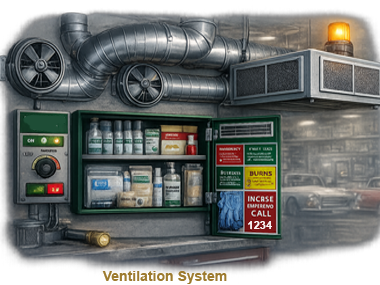
 Air quality management is central to both health and quality control, making ventilation systems indispensable. Restoration and maintenance work will invariably generate dust, fumes as well as vapours from painting, sanding, and welding processes.
Dealing with these factors require that the workshop should have effective ventilation systems in place to remove harmful airborne contaminants, protect respiratory health and prevent build-up of flammable vapours. Having a proper airflow system in place will also improve working conditions while helping to maintain clean surfaces, important for high-quality paint and assembly work.
In a classic car restoration and maintenance workshop, the health risks caused by constant exposure to excessive noise is a factor that is often overlooked, although it can cause long-term health consequences. Placing noise reduction enclosures around compressors, machinery and test equipment have been proven to significantly reduce ambient noise levels. By isolating noise sources, restorers can maintain a more comfortable and focused working environment.
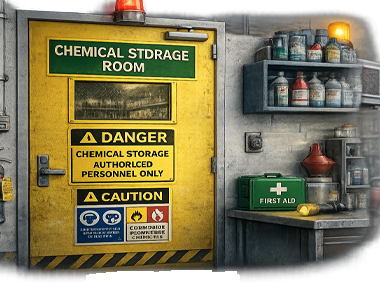 Safe handling of hazardous substances is another factor that must be taken seriously and can be achieved through the setting up and maintenance of dedicated chemical storage rooms. Dedicated chemical storage rooms are designed to contain flammable, toxic or reactive materials safely, with appropriate ventilation, fire resistance and spill containment equipment within easy reach. In restoration and maintenance workshops, where paints, solvents, fuels, and adhesives are common, controlled storage is essential.
 In recent years, awareness has grown around the role that environmental responsibility has to play in the workplace. The key to preserving the environment as far as classic car restoration workshop must play is through the establishment of oil and waste separation systems that separate oils, fuels, and contaminants from wastewater before disposal, preventing pollution and protecting drainage systems.
Clear safety infrastructure reduces accidents, protects valuable assets, and builds confidence among staff and clients alike. Environmental controls ensure that restoration activities do not compromise surrounding communities or ecosystems.
From a business perspective, compliance equipment also reduces risk, while complying to safety and environmental standards will protect workshops from the risk of legal penalties, insurance issues and reputational damage.
Safety, environmental and compliance equipment is not an optional add-on in a classic car restoration and maintenance workshop it is a foundational investment.
ance workshop will be self-sufficient, precise and capable of producing authentic work to a very high standard.
- Vehicle Lifting and Support Equipment
- Electrical and Power Infrastructure
- Welding and Fabrication Equipment
- Metalworking and Fabrication Equipment
- Cleaning, Degreasing and Preparation Equipment
- Engine and Mechanical Workshop Equipment
- Bodywork,Paint and Finishing Equipment
- Sanding, Preparation and Rust Control Equipment
- Tyre, Wheel and Suspension Equipment
- Fuel, Cooling and Fluid Handling Systems
- Exhaust and Emissions Equipment
- Electrical and Diagnostic Equipment
- Storage and Workshop Furniture
- Safety, Environmental and Compliance Equipment
- Comfort, Workflow and Support Infrastructure
-