 Any form of classic car restoration and maintenance project can be either long-term or short term, although, in every event, will be detail-driven, placing significant demands on both the people and the facilities of the workshop.
A full restoration or overhaul can take several months, requiring the need to sustain concentration levels as well as precision and careful project management. Comfort, workflow, and support infrastructure combine to play a crucial role in maintaining productivity, protecting workmanship, while ensuring a professional experience.
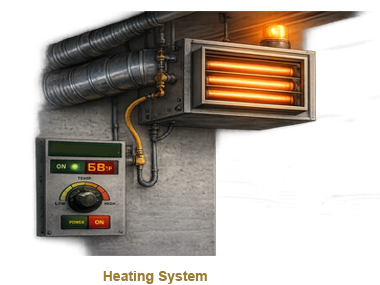
 A well-designed workshop heating system is a fundamental factor to increasing productivity as well as creating a pleasant working environment. Many aspects of restoration and maintenance, including metal shaping, painting and precision assembly, are temperature sensitive.
Working in an environment where heating is controlled and consistent ensures that materials behave predictably, fatigue levels are reduced, allowing workshop technicians to maintain focus during long hours of detailed and often tedious work.
 Further enhanced by ventilation and air circulation fans are air quality and comfort systems designed to move fresh air through the workshop, dispersing heat, fumes, and airborne particles in the process.
Effective air circulation enhances health and safety levels while also preventing stagnant conditions that can affect paint finishes and promote condensation. In a busy restoration and maintenance workshop, a healthy airflow will create and maintain a clean, comfortable atmosphere across multiple work bays.
Especially important when working with classic cars is moisture control. When working with classic cars some of them seventy years old or older, does not make installing a dehumidification system nothing less than a valuable investment. Excess humidity will invariably accelerate corrosion on bare metal, damage stored components while compromising paint and filler work.
 Dehumidification not only protects vehicles but also tools, equipment and materials, particularly during extended restoration projects.
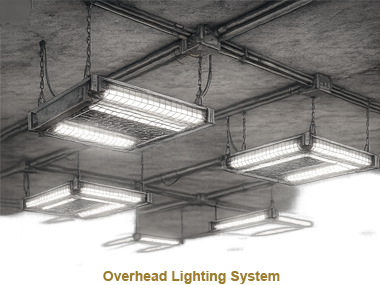
Another major development that has surfaced in recent years is fixed LED task lighting which provides focused illumination exactly where it is needed. Whether working inside cramped engine bays, or under dashboards, task lighting reduces eye strain and improves accuracy. Today’s LED lighting systems offer high brightness with reduced energy consumption and minimal heat output, making the system ideal for continuous use. Good general lighting improves safety and reduces mistakes caused by poor visibility.
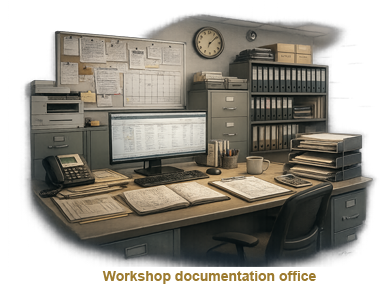
 While it may seem of lesser importance to the classic car restore or maintainer, establishing a documentation and records office is essential, especially when it comes to managing complex restoration projects.
Keeping accurate records of the stages of disassembly, parts sourcing, measurements, and processes will more than pay its way, by ensuring accountability and consistency. Not only that but properly maintained documentation supports historical research, warranty tracking and will help to build a programme for future maintenance, adding long-term value to the restored vehicle.
 Together, these infrastructure elements create a workshop environment that supports both craftsmanship and business operations. Comfortable working conditions reduce fatigue and errors, while efficient workflow design minimises wasted time and movement. Support spaces allow technicians to focus on skilled tasks while administrative and customer-facing activities run smoothly.
Comfort, workflow, and support infrastructure are key enablers of high-quality classic car restoration. By investing in a well-designed working environment, restoration and maintenance workshops will enhance productivity levels, maintain consistent quality allowing them to deliver a professional experience that matches the craftsmanship of the vehicles they restore.

- Vehicle Lifting and Support Equipment
- Electrical and Power Infrastructure
- Welding and Fabrication Equipment
- Metalworking and Fabrication Equipment
- Cleaning, Degreasing and Preparation Equipment
- Engine and Mechanical Workshop Equipment
- Bodywork,Paint and Finishing Equipment
- Sanding, Preparation and Rust Control Equipment
- Tyre, Wheel and Suspension Equipment
- Fuel, Cooling and Fluid Handling Systems
- Exhaust and Emissions Equipment
- Electrical and Diagnostic Equipment
- Storage and Workshop Furniture
- Safety, Environmental and Compliance Equipment
- Comfort, Workflow and Support Infrastructure
-