
A classic car restoration and maintenance workshop may have the most skilled workers and the finest of tools and equipment at their disposal, but the whole process will become bogged down if they are not organised. Organisation is one of the most critical elements of restoration and maintenance projects, but too often is not taken seriously.
Investing in well-designed storage and workshop furniture, based around a pre-planned workflow, not only improves efficiency, saves time but also protects valuable parts and supports safe working practices. authenticity of restored vehicles.
 The focal point of any classic car restoration and maintenance workshop should always be the workbench.
Designed and produced for heavy-duty, these workbenches provide a stable, load-bearing surface for disassembly, assembly, machining preparation, and auto-electrical work.
In classic car restoration and maintenance projects, where engines, gearboxes, and suspension components are frequently handled, a solid well-grounded and rigid workbench will prevent any form of movement, improving accuracy levels. Fitted with an integrated vice, drawers for tool and parts storage and power outlets will turn the workbench into a central workstation rather than just a simple work surface.
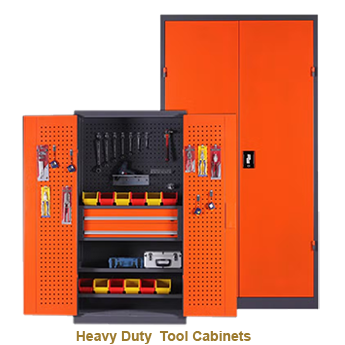 Secure tool organisation should be provided by steel tool cabinets, placed adjacent to workbench. Steel cabinets will have been designed to withstand handling of heavy tools, oils, and workshop impacts, organised to reduce time spent searching for tools. In a restoration environment, where precision and cleanliness matter, proper tool storage directly improves workflow and reduces the risk of tool damage.
 Wall-mounted shadow boards will play an important role in visual organisation. These boards outline the shape of each tool, making it immediately obvious when something is missing. Shadow boards encourage consistent tool return, reduce loss, and support efficient working habits. They are especially useful in shared workshops, ensuring that specialist tools remain available and properly stored.
Managing the vast number of fixings involved in restoration is no simple task yet can be much more straightforward using fastener and parts bins.
Classic cars of the Fifties and Sixties often use non-standard bolts clips and screws, that must be kept matched to their original locations. Having clearly labelled and organised bins will allow fasteners to be sorted by size, thread type, or vehicle section, preventing mix-ups and saving time during reassembly.
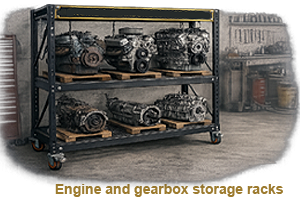 Larger parts require dedicated storage solutions, and engine and gearbox storage racks provide safe, space-efficient support for heavy mechanical assemblies. Having access to proper racks keep engines and gearboxes from clustering on the workshop floor the floor, preventing accidents, reducing corrosion risk and making them easier to move and inspect.
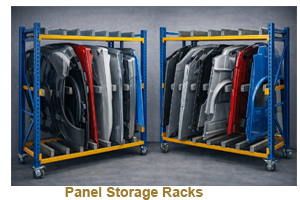
In the body shop, panel storage racks have become invaluable, as body panels are often removed early in a project and may not be refitted for an extended period. The ability to store panels vertically in racks will considerably reduce the risk of them becoming warped , scratched or dented, particularly important when handling original panels that may be difficult or impossible to replace.
 Vehicle mobility and storage are further supported by tyre racks. These allow wheels and tyres to be stored correctly, preventing deformation and making them easy to access during chassis and suspension work. Proper tyre storage also protects expensive period-correct tyres from damage caused by stacking or poor handling.
Safety and compliance are addressed through hazardous materials cabinets. Restoration workshops handle flammable liquids, solvents, paints, adhesives, and oils that must be stored correctly. These should be stored in cabinets, often purpose-built to provide fire resistance, ventilation, and spill containment, reducing risk to both personnel and property. Having proper storage complies with regulations in the workplace while demonstrating professional standards.
Beyond individual items, the overall advantage of good storage and furniture lies in workflow and protection. An organised workshop reduces downtime, prevents lost parts, and minimises rework caused by damage or misplacement. Clean, structured storage also improves safety by keeping walkways clear and reducing manual handling risks.
From a project management perspective, good storage allows multiple restorations to progress simultaneously without confusion. Components can be clearly associated with specific vehicles, ensuring that parts remain correctly matched throughout the restoration and maintenance process.

- Vehicle Lifting and Support Equipment
- Electrical and Power Infrastructure
- Welding and Fabrication Equipment
- Metalworking and Fabrication Equipment
- Cleaning, Degreasing and Preparation Equipment
- Engine and Mechanical Workshop Equipment
- Bodywork,Paint and Finishing Equipment
- Sanding, Preparation and Rust Control Equipment
- Tyre, Wheel and Suspension Equipment
- Fuel, Cooling and Fluid Handling Systems
- Exhaust and Emissions Equipment
- Electrical and Diagnostic Equipment
- Storage and Workshop Furniture
- Safety, Environmental and Compliance Equipment
- Comfort, Workflow and Support Infrastructure
-