 One of the most important infrastructure components in a classic car restoration and maintenance workshop is its compressed air system. While individual pneumatic tools often receive the most attention, it remains the quality and layout of the air system itself that determines reliability, efficiency and finished work quality. From metal fabrication and sanding to painting, cleaning and assembly, access to compressed air underpins many of the most critical restoration processes.
At the heart of the system is the air compressor, which can be either piston or rotary screw driven.
 Commonly found in smaller or medium-sized restoration workshops, piston driven compressors provide robust performance while requiring relatively simple maintenance.
On the other hand, rotary screw compressors, although requiring a larger initial investment, justify their expensive price tag, through providing continuous-duty operation, quieter running and increased efficiency.
Rotary screw compressors are ideal for larger classic car maintenance and restoration workshop projects using multiple airtools which are often in use.
A fixed installation ensures consistent pressure and flow, avoiding the limitations and interruptions associated with portable units.
Supporting the compressor is almost always the air receiver though a permanent air storage tank, either of which play a crucial role in system stability.
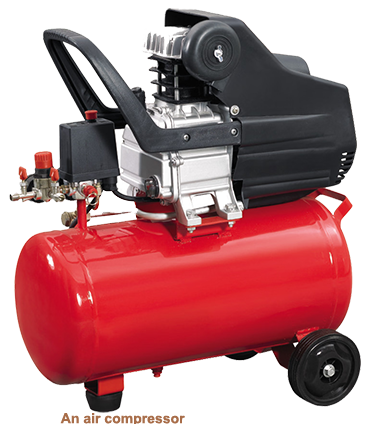 The air receiver is designed to stores compressed air, smoothing pressure fluctuations and reducing compressor cycling, particularly important in restoration or maintenance projects, where tools such as sanders, spray guns, and die grinders require steady airflow to deliver consistent results.
Choosing a properly sized air receiver also makes for short bursts of high demand, without a sudden drop in system pressure.
Efficient air distribution is achieved through >hard-plumbed air lines rather than temporary hoses run across the workshop. Rigid piping systems, typically made from either aluminium or steel, or modern composite materials, will combine to reduce pressure losses while improving airflow consistency, also enhancing safety and organisation, keeping walkways clear and reducing trip hazards, improving cleanliness and workflow.
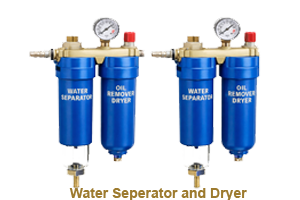
 Clean, dry air is essential, especially when painting, blasting, or using precision pneumatic tools, making water separators and dryerscritical components. The high moisture levels that will occur when using a compressed air system will often lead to corrosion inside tools, inconsistent spray patterns and cause paint defects such as fisheyes or blistering.
The role of the water separator is to remove bulk moisture, which for classic car restoration and maintenance projects, where paint finishes and corrosion protection are paramount, effective air drying is not an option.
 To protect and extend the life of pneumatic tools, oil mist lubricators are often incorporated into the air system. Oil mist lubricators are designed to introduce a controlled amount of lubricating oil into the airflow, reducing wear in air motors and internal seals, significantly extending tool life while ensuring smooth, consistent workshop performance. >Oil mist lubricators can be installed centrally or at specific tool drops, depending on the application.
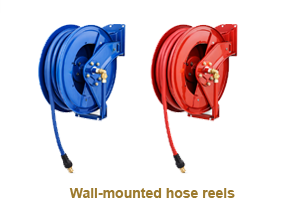
Day-to-day usability of a pneumatically driven system is greatly improved by >wall-mounted hose reels, which keep air lines neatly stored when not in use and allow hoses to be pulled out only as far as required, reducing clutter, preventing hose damage and speeding up tool changes. In a busy restoration and maintenance workshop, hose reels play an important role in worker safety by keeping floors clear of tangled air lines and reducing wear on fittings.
Finally, dedicated air outlets at work bays< ensure that compressed air is always available exactly where it is needed, while strategically placed outlets will allow multiple stations to work simultaneously without the risk of tripping over long hose runs, inconsistent pressure or even loss.
In a classic car restoration and maintenance workshop, by combining a suitable fixed compressor, adequate air storage, clean and dry air treatment, and well-planned distribution, tool performance, improved safety and achieve consistent, high-quality results across every stage of the restoration process is maximised.

- Vehicle Lifting and Support Equipment
- Compressed Air System Equipment
- Electrical and Power Infrastructure
- Welding and Fabrication Equipment
- Metalworking and Fabrication Equipment
- Cleaning, Degreasing and Preparation Equipment
- Engine and Mechanical Workshop Equipment
- Bodywork,Paint and Finishing Equipment
- Sanding, Preparation and Rust Control Equipment
- Tyre, Wheel and Suspension Equipment
- Fuel, Cooling and Fluid Handling Systems
- Exhaust and Emissions Equipment
- Electrical and Diagnostic Equipment
- Storage and Workshop Furniture
- Safety, Environmental and Compliance Equipment
- Comfort, Workflow and Support Infrastructure
-
eq4