In even the humblest of classic car restoration and maintenance workshops, safe and stable vehicle support is a must.
Unlike routine servicing, restoration work often involves partially disassembling long-term projects meaning that fragile structures, and irregular weight distribution will lead to sub-standard work while increasing the chances of an accident occurring. Purpose-designed vehicle lifting and support equipment allows restorers to access every part of the vehicle safely while protecting both the car and the technician. The correct combination of lifting solutions also improves workflow, accuracy, and overall workshop efficiency.
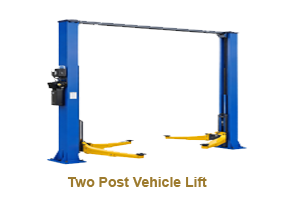 A cornerstone of many restoration workshops is the two-post vehicle lift which can be either asymmetric or symmetric. Two-post lifts consistently provide excellent access to the underside of the vehicle, making it ideal for chassis repairs, drivetrain removal, exhaust fabrication and suspension repairs and maintenance work, thanks to their ability to offer balanced support for evenly weighted vehicles. Asymmetric designs allow doors to open more easily, a factor which is particularly useful when working on interiors or the need arises to frequently access the vehicle’s interior.
When working on classic cars, the factor of careful pad placement is essential, while the flexibility of two-post lifts allows contact points to be readily adapted to older chassis designs and reinforced jacking locations.
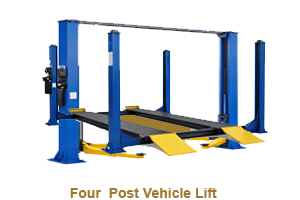 The four-post vehicle lift, which is often operated in conjunction with rolling jacks, provides a different set of advantages, making it particularly suited for alignment work, vehicles with delicate or unknown structural integrity or even long-term storage,
Supporting the car by its wheels rather than its chassis will reduces stress on older body shells making four-post lifts more suitable for working on restoration and maintenance projects involving a vehicle with fragile classics. The addition of rolling jacks will allow the vehicle’s wheels to be lifted independently, enabling brake, suspension and wheel work to be carried out without compromising stability. Four-post lifts are also popular where workshop ceiling height is limited, as they often require less overhead clearance than two-post designs.
 For workshops where restricted space or lower ceilings present a problem, the low-rise scissor lift provides a highly practical solution. The low-rise scissor allows for a vehicle to be raised sufficiently to allow comfortable underbody access while remaining compact and often portable. Particularly well suited to servicing, detailing, brake work, and light mechanical tasks, low-rise scissor lifts in restoration projects are useful for frequent access during reassembly phases, allowing the vehicle to be raised and lowered quickly.
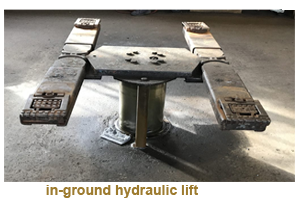 The long established in-ground hydraulic lift still represents a premium solution for restoration workshops whose focus is on efficiency and aesthetics. Installed flush with the workshop floor, these lifts eliminate obstructions when not in use and allow unrestricted access around the vehicle. In-ground lifts are ideal for bodywork, mechanical repairs, and inspection tasks, and they are particularly valued in workshops where space optimisation and a clean working environment are priorities. Their smooth lifting action also makes them well suited to delicate classic vehicles.
A more traditional but still valuable option is the vehicle inspection pit. Inspection pits provide constant underbody access without the need or ability to raise the vehicle, with all the work being carried out underbody. This makes the making the vehicle inspection pit ideal for working on exhausts, leak diagnosis, and routine inspections.
For classic cars, pits offer a gentle alternative to lifting systems, reducing stress on aged suspension and chassis components. When properly ventilated and illuminated, inspection pits can be safe, efficient, and cost-effective, particularly in workshops with limited headroom.
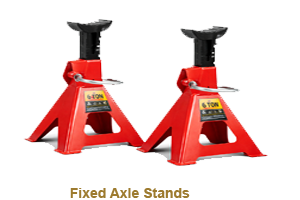 Not all classic car restoration and maintenance projects require powered equipment, and fixed axle stands / chassis stands remain essential tools. High-quality, adjustable stands are another option providing stable support during partial lifts r when working on specific vehicle sections or for long-term storage. In restoration work, axle stands are often used in conjunction with lifts or jacks to support body shells, engines or subframes during complex operations.
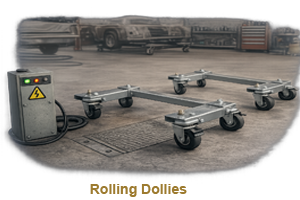 Finally, rolling chassis dollies can provide exceptional flexibility at a low cost while improving workshop layout and workflow, allowing unfinished vehicles or bare shells to be moved easily around the workshop, freeing up lifts and work bays.
In summary, vehicle lifting and support equipment acts as a foundation in the workshop, providing levels of safety, efficiency, and quality workmanship. Systems such as two-post and four-post lifts, scissor lifts, in-ground solutions, inspection pits, axle stands, and chassis dollies, restorers can be combined and adapted to be a powerful piece of equipment, playing a part in every stage of the restoration process while protecting both the vehicle and the people working on it.
84%

- Vehicle Lifting and Support Equipment
- Compressed Air System Equipment
- Electrical and Power Infrastructure
- Welding and Fabrication Equipment
- Metalworking and Fabrication Equipment
- Cleaning, Degreasing and Preparation Equipment
- Engine and Mechanical Workshop Equipment
- Bodywork,Paint and Finishing Equipment
- Sanding, Preparation and Rust Control Equipment
- Tyre, Wheel and Suspension Equipment
- Fuel, Cooling and Fluid Handling Systems
- Exhaust and Emissions Equipment
- Electrical and Diagnostic Equipment
- Storage and Workshop Furniture
- Safety, Environmental and Compliance Equipment
- Comfort, Workflow and Support Infrastructure
-
eq4