Among the most technically demanding aspects of classic car work is engine and drivetrain restoration. Engine and drivetrain systems are often complex, cumbersome and in the case of many classic cars, irreplaceable- factors that demand careful handling, precise measurement, and absolute cleanliness.
Developments in engine and mechanical workshop equipment has paved the way for restorers and maintainers to work accurately, efficiently and safely while utilising their skills to preserve the originality and reliability of historic vehicles.
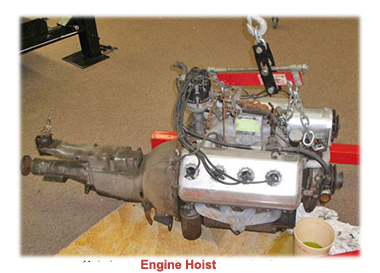 Safe handling of heavy components begins with an engine hoist (fixed rail or jib crane). Classic engines are often large, awkwardly balanced, and constructed from cast iron or aluminium. A properly installed hoist allows engines to be lifted in and out of engine bays in a controlled manner, reducing the risk of damage to bodywork or injury to technicians. Fixed rails and jib cranes also free up floor space, making them ideal for long-term restoration projects.
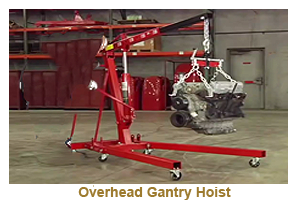 For greater flexibility and heavier loads, the overhead gantry crane provides significant advantages. Gantry cranes allow for engines, gearboxes and axles to be moved horizontally across the workshop, easily and rapidly facilitating transfer between workstations, particularly useful when applied in professional restoration and maintenance environments where multiple mechanical assemblies are being worked on simultaneously.
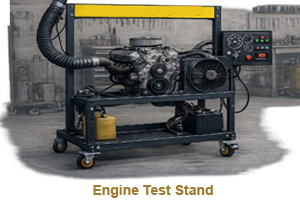
 Once it has been removed, the engine to be worked on can be mounted on an engine test stand, that allows for easy rotation, inspection and assembly in a stable position. Test stands enable accurate fitting of components by providing clear access to all sides of the engine and safe torque application, as well as simplifying tasks such as accessory installation and timing setup.
 Before an engine returns to the vehicle, controlled testing is invaluable, and having access to an engine run-in bench will make the job so much easier allowing a rebuilt engine to be started, warmed, and monitored outside the vehicle. The ability to work in such a controlled environment enables oil pressure, temperature, and leak checks to be checked without risking damage to freshly painted engine bays or difficult-to-access components, significantly improving long-term reliability.
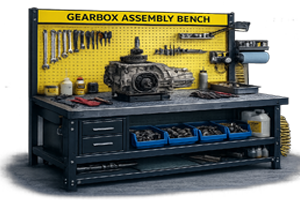 Precision work on valve gear and combustion chambers is supported by a dedicated cylinder head workbench. These benches are designed to hold cylinder heads securely while allowing access for valve removal, seat cutting, spring installation, and measurement. A stable workbench reduces the risk of accidental damage and improves accuracy during critical machining and assembly operations.
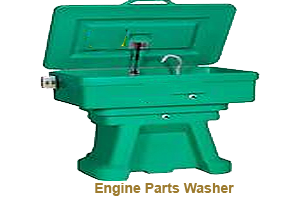 Cleanliness is essential in mechanical restoration, and having a parts washer (solvent or aqueous) on site should be a workshop staple. Parts washers do all the dirty jobs, such as removing grease, oil and contaminants from the engine and drivetrain components, thus preparing them for inspection and assembly. Solvent washers offer rapid degreasing, while aqueous systems provide an environmentally friendlier alternative with effective cleaning performance.
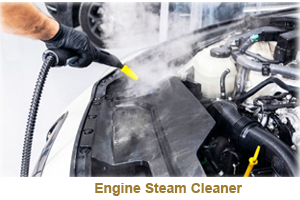 In recent years the advent of the steam cleaner has changed, and only for the better, other cleaning methods by using heat to break down stubborn grease and grime. Particularly effective for power cleaning engine blocks, gearboxes, and axle housings, while reducing chemical usage, steam cleaning has also been found to be useful for final cleaning prior to painting or assembly.
Other equipment options for a classic car restoration include a differential setup bench that supports accurate assembly and adjustment of axle units. Setting bearing preload, backlash, and gear contact patterns requires not only specialist knowledge but also tremendous stability and precision. A dedicated bench allows these adjustments to be made methodically, ensuring quiet operation and long service life.
In recent years the development of specialised engine and mechanical workshop equipment has transformed complex and often difficult restoration tasks into controlled, repeatable processes. From safe lifting and precise assembly to thorough cleaning and controlled testing, these tools enable restorers to rebuild engines and drivetrains with confidence. For any serious classic car restoration and maintenance workshop, investment in proper mechanical equipment is essential to achieving reliable, professional results.

- Vehicle Lifting and Support Equipment
- Compressed Air System Equipment
- Electrical and Power Infrastructure
- Welding and Fabrication Equipment
- Metalworking and Fabrication Equipment
- Cleaning, Degreasing and Preparation Equipment
- Engine and Mechanical Workshop Equipment
- Bodywork,Paint and Finishing Equipment
- Sanding, Preparation and Rust Control Equipment
- Tyre, Wheel and Suspension Equipment
- Fuel, Cooling and Fluid Handling Systems
- Exhaust and Emissions Equipment
- Electrical and Diagnostic Equipment
- Storage and Workshop Furniture
- Safety, Environmental and Compliance Equipment
- Comfort, Workflow and Support Infrastructure
-