Tyre, wheel, and suspension systems play a crucial role in how a classic car handles the road. Classic cars often rely on period-specific suspension geometry, tyre constructions, and braking systems that require careful setup and sympathetic handling. Dedicated tyre, wheel, and suspension equipment allows restorers to work accurately, safely, and efficiently while preserving the original character and performance of historic vehicles.
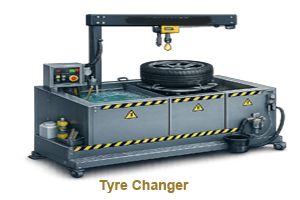 A fundamental tool in this area is the tyre changer. Classic cars of the Fifties and Sixties often came fitted with narrow cross-ply tyres, delicate alloy wheels, or steel rims that are easily damaged by improper handling.
To handle these wheels professionally, a professional tyre changer with adjustable clamping and controlled bead-breaking should be available, as it allows tyres to be mounted and removed without marking wheels or stressing old rims, especially important when fitting rare or expensive period-correct tyres, where damage would be costly and difficult to rectify.
Once tyres are fitted, have them balanced accurately essential, and any restoration and maintenance workshop who wants to handle this work in-house should have a wheel balancer on hand. Driving on imbalanced wheels will eventually begin to cause vibration, uneven tyre wear, and undue stress on suspension and steering components.
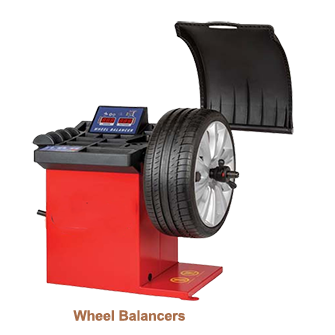 Classic cars were fitted with softer suspension and less refined damping meaning that they particularly sensitive to imbalance. Modern balancing equipment allows both static and dynamic balancing, ensuring smooth operation while maintaining the integrity of original wheels.
 Restoring or maintaining a classic car’s suspension system frequently involves dismantling and rebuilding components under significant stored energy, making the aspect of operator safety of paramount importance.
A floor-mounted hydraulic spring compressor provides controlled, stable compression of the vehicle’s coil springs, reducing the risk of injury and component damage. Floor-mounted units are more stable, providing higher capacity than portable compressors, making them suitable for handling larger or heavier classic suspension assemblies.
Suspension that handles predictably is another safety demand that should be taken seriously, with the wheel alignment rig playing a vital role in suspension setup. Classic cars often have alignment specifications that differ significantly from the cars of today. Having access to an alignment rig will allow such issues as camber, caster, and toe to be measured and adjusted accurately, ensuring correct steering response, while reducing tyre wear and improving stability without compromising originality.
Braking systems and performance is another key factor in safety consideration. Most maintenance workshops will have access to a brake lathe for disc and drum skimming.
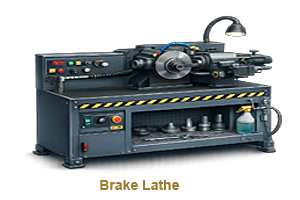 Brake lathes are designed to allow worn or distorted brake components to be refurbished rather than replaced, with considerable cost savings.
Many classic cars use drum brakes or discs that are in many cases no longer readily available. Skimming restores smooth, parallel braking surfaces, improving braking efficiency and reducing pedal pulsation while retaining original components, a significant advantage for authenticity-focused restorations.
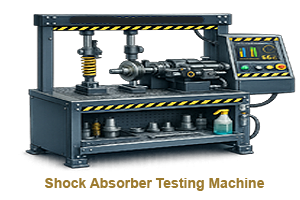 When all these systems work together, restorers can set up a rolling chassis that behaves as intended by its original designers. Proper tyre fitment, balanced wheels, aligned suspension, true brake surfaces, and matched damping all contribute to safe, enjoyable driving.
These tools also improve efficiency and safety within the workshop. Tasks that might otherwise require outsourcing—such as tyre fitting, brake skimming, or alignment—can be carried out in-house, saving time and allowing closer quality control. Safety-focused equipment such as spring compressors reduces risk during complex suspension work.

- Vehicle Lifting and Support Equipment
- Compressed Air System Equipment
- Electrical and Power Infrastructure
- Welding and Fabrication Equipment
- Metalworking and Fabrication Equipment
- Cleaning, Degreasing and Preparation Equipment
- Engine and Mechanical Workshop Equipment
- Bodywork,Paint and Finishing Equipment
- Sanding, Preparation and Rust Control Equipment
- Tyre, Wheel and Suspension Equipment
- Fuel, Cooling and Fluid Handling Systems
- Exhaust and Emissions Equipment
- Electrical and Diagnostic Equipment
- Storage and Workshop Furniture
- Safety, Environmental and Compliance Equipment
- Comfort, Workflow and Support Infrastructure
-
eq4